

Suit for Declaration of Title & Ownership in Pakistan: Section 42 Specific Relief Act, Revenue Records & Civil Court Injunction Remedies (دعویٰ استقرارِ حق و ملکیت اراضی زیر دفعہ 42 ایکٹ داد رسی خاص)
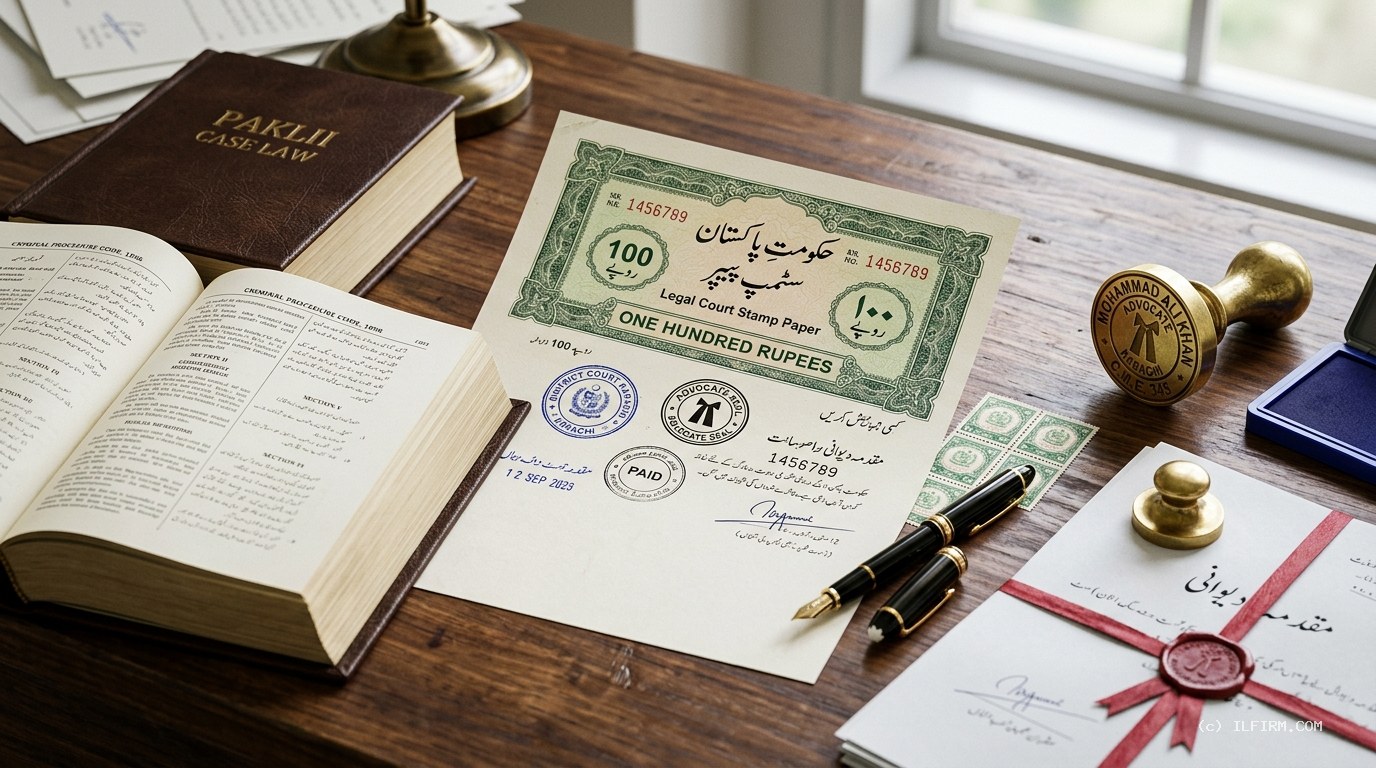
1. Executive Summary & Jurisprudential Foundations (تعارفی خلاصہ و بنیادی قانونی محرکات)
In the jurisprudential landscape of the Islamic Republic of Pakistan, immovable property represents far more than an economic asset; it is the cornerstone of familial legacy, commercial enterprise, and constitutional dignity. However, land disputes constitute an overwhelming percentage of civil docket congestion across subordinate civil courts, District Courts, the provincial High Courts—including the Peshawar High Court Mingora Bench Dar-ul-Qaza Swat (پشاور ہائی کورٹ بنچ دارالقضاء سوات), Lahore High Court, Sindh High Court, and High Court of Balochistan—culminating before the Supreme Court of Pakistan (عدالت عظمیٰ پاکستان). Among the civil remedies available to an aggrieved owner whose proprietary entitlements are challenged, usurped, or clouded by fraudulent documentation, the Suit for Declaration of Title and Ownership (دعویٰ استقرارِ حق ملکیت) under Section 42 of the Specific Relief Act 1877 (دفعہ 42 ایکٹ دادرسیِ خاص 1877) represents the paramount substantive vehicle for judicial confirmation of legal character and real property ownership.
A declaratory decree is an authoritative judicial pronouncement that confirms an existing legal status, right to property, or constitutional entitlement. Unlike purely possessory actions, a suit for declaration operates to remove the dark clouds cast upon a litigant’s title by unscrupulous adversaries, forged revenue entries, fraudulent mutations, fictitious gift deeds, or unverified inheritance settlements. The philosophical foundation of Section 42 is anchored in preventive and protective justice: it allows a person entitled to any legal character or to any right as to any property to institute a suit against any person denying, or interested to deny, his title, thereby securing an unassailable judgment in rem or in personam that binds the parties and their privies forever.
Nevertheless, the institution of a declaratory suit in Pakistani civil courts is governed by rigorous procedural rules and substantive conditions precedent. The jurisprudence developed by the apex court strictly prohibits academic declarations, frivolous litigation, and piecemeal adjudication. Under the mandatory Proviso to Section 42 (دفعہ 42 کا امتناعی شرطیہ), no court shall make any declaration where the plaintiff, being able to seek further relief than a mere declaration of title, omits to do so. Consequently, an aggrieved proprietor who has been dispossessed of physical possession must couple their declaratory prayer with a consequential prayer for Restoration of Possession (حصولِ قبضہ / بحالیِ قبضہ) under Section 8 of the Specific Relief Act (دفعہ 8 ایکٹ دادرسیِ خاص), accompanied by an application for Temporary Injunction (حکمِ امتناعی عارضی) under Order XXXIX Rules 1 & 2 of the Code of Civil Procedure 1908 (آرڈر 39 رول 1 و 2 مجموعہ ضابطہ دیوانی 1908) to prevent third-party alienation pendente lite.
For expatriates and Overseas Pakistanis (تارکینِ وطن / بیرونِ ملک مقیم پاکستانی) residing in the United Kingdom, the United States, Canada, Saudi Arabia, and the United Arab Emirates, real property assets in Pakistan—particularly agricultural holdings, commercial plots, and ancestral estates in KP and Punjab—are persistently targeted by organized land grabbers, collusive revenue field officials, and dishonest co-sharers during their physical absence abroad. Understanding the intricate procedural anatomy, statutory deadlines, evidentiary burdens under the Qanun-e-Shahadat Order 1984 (قانونِ شہادت آرڈر 1984), and superior court precedents is indispensable for securing absolute proprietary immunity and defeating predatory claims.
A. Anatomy of Property Title Disputes: Cloud on Title & Cause of Action (ملکیت پر حرف آنا اور بنائے دعویٰ کا مفہوم)
A Cloud on Title (حقِ ملکیت میں ابہام یا نقص) emerges whenever an apparent defect, fraudulent instrument, invalid revenue mutation, fictitious inheritance deed, or adverse claim exists that impairs the marketability or legal validity of an owner’s title, even if the instrument or claim is invalid on its face upon deep legal scrutiny. Under established civil principles, an owner is not obligated to rush to court immediately upon the surreptitious incorporation of an adverse administrative entry in revenue records; rather, a fresh and actionable Cause of Action (بنائے دعویٰ) crystallizes whenever there is an overt, unequivocal, and hostile denial of the owner’s title, or an affirmative attempt by an adverse party to dispossess the owner or alienate the parcel under color of such spurious documentation.
In practice, the cause of action in a declaratory suit is continuous and recurring. The Supreme Court of Pakistan has repeatedly held that every fresh denial of an owner’s legitimate title and every fresh hostile assertion generates a fresh cause of action to seek judicial protection. However, where an adverse instrument has been registered under the Registration Act 1908 (ایکٹ رجسٹریشن 1908) or an overt mutation has been sanctioned in the presence of the party, statutory limitation periods begin to run relentlessly, requiring urgent invocation of civil court jurisdiction.
B. Constitutional Anchors: Protection of Property under Articles 23 & 24 (آئینِ پاکستان 1973 کے تحت حقِ جائیداد کا تحفظ)
The substantive right to own, enjoy, and vindicate property title is firmly anchored in the Constitution of the Islamic Republic of Pakistan 1973 (آئینِ اسلامی جمہوریہ پاکستان 1973). Article 23 (آرٹیکل 23 — حقِ حصول و تصرفِ جائیداد) guarantees that every citizen shall have the right to acquire, hold, and dispose of property in any part of Pakistan, subject to the Constitution and reasonable restrictions imposed by law in the public interest. Furthermore, Article 24 (آرٹیکل 24 — جائیداد کے جبری چھن جانے سے تحفظ) provides an inviolable constitutional safeguard that no person shall be deprived of his property save in accordance with law, and no property shall be compulsorily acquired or taken possession of save for a public purpose and with adequate authority.
When a private wrongdoer or collusive state machinery attempts to dispossess an owner or fabricate fraudulent public records, the institution of a declaratory suit under Section 42 SRA operates as the direct civil enforcement of these sacred constitutional guarantees. The superior courts have noted that civil courts, acting under Section 9 of the Code of Civil Procedure 1908 (دفعہ 9 ضابطہ دیوانی), are courts of plenary and ultimate jurisdiction to determine all rights of a civil nature, serving as the frontline guardians of constitutional property rights against both private land grabbers and administrative overreach.
2. Statutory Architecture & Legislative Interplay (بنیادی قانونی ڈھانچہ و متعلقہ دفعات کا تقابلی جائزہ)
A master advocate handling property litigation in Pakistan must navigate a sophisticated web of intersecting substantive and procedural statutes. A declaratory suit cannot be viewed in statutory isolation; its viability, maintainability, and ultimate execution depend on the synchronized application of the following core legislative enactments:
A. Section 42 of the Specific Relief Act 1877: Discretionary Relief & The Proviso Trap (دفعہ 42 ایکٹ دادرسی خاص اور اس کا امتناعی شرطیہ)
Section 42 of the Specific Relief Act 1877 provides the substantive charter for declaratory actions. The statutory text establishes:
“Any person entitled to any legal character, or to any right as to any property, may institute a suit against any person denying, or interested to deny, his title to such character or right, and the court may in its discretion make therein a declaration that he is so entitled, and the plaintiff need not in such suit ask for any further relief: Provided that no court shall make any such declaration where the plaintiff, being able to seek further relief than a mere declaration of title, omits to do so.”
From this statutory formulation, three fundamental legal elements emerge:
- Entitlement to Legal Character or Proprietary Right: The plaintiff must establish an existing vested legal character (such as legitimacy, status as lawful heir, or membership of a corporate entity) or a vested right as to specific movable or immovable property. Contingent, speculative, or inchoate claims do not qualify.
- Hostile Denial or Threat by the Defendant: The defendant must have expressly denied, or exhibited conduct demonstrating an active intent to deny, the plaintiff’s legal character or proprietary right.
- The Mandatory Bar of the Proviso (امتناعی شرطیہ کی پابندی): This is the most dangerous jurisdictional minefield in civil property practice. If the plaintiff is out of physical or constructive possession and is legally entitled to seek the consequential relief of possession, but sues solely for a bare declaration of title, the suit is fatal and liable to dismissal under the statutory bar of the proviso. The court is stripped of discretion to grant a declaratory decree where consequential relief is intentionally or negligently omitted.
B. Preventive Relief: Sections 52, 53 & 54 SRA (حکمِ امتناعی دوامی و امتناعی احکامات)
A declaratory decree by itself merely settles the legal title; it does not physically prevent the defeated adversary from entering the land, digging foundations, cutting timber, or transferring the property to an unsuspecting third party. Therefore, an experienced advocate invariably joins a prayer for Permanent Injunction (حکمِ امتناعی دوامی) under Sections 53 & 54 of the Specific Relief Act 1877 (دفعات 53 و 54 ایکٹ دادرسی خاص). Under Section 54, a perpetual injunction may be granted to prevent the breach of an obligation existing in favor of the plaintiff, whether express or implied, particularly where the defendant invades or threatens to invade the plaintiff’s right to, or enjoyment of, property, and where pecuniary compensation would not afford adequate relief.
Where unauthorized construction has already commenced or physical obstructions have been erected, the plaintiff must also seek a Mandatory Injunction (حکمِ امتناعی تاکیدی) under Section 55 SRA (دفعہ 55 ایکٹ دادرسی خاص) to compel the demolition and removal of the unlawful encroachments, restoring the status quo ante.
C. The Code of Civil Procedure 1908: Sections 9, Order VII Rule 11 & Order XXXIX (ضابطہ دیوانی 1908 کا دائرہ اختیار، اخراجِ عرضی دعویٰ اور عبوری امتناع)
The procedural machinery of the suit is governed entirely by the CPC 1908:
- Section 9 CPC (عمومی دائرہ اختیار دیوانی عدالت): Confers plenary jurisdiction upon the civil court to try all suits of a civil nature, excepting suits of which their cognizance is either expressly or impliedly barred by any special enactment.
- Order VII Rule 11 CPC (اخراجِ عرضی دعویٰ برائے عدم بنائے دعویٰ یا قانونی قدغن): Enables the trial court to reject the plaint at the threshold if it fails to disclose a clear cause of action, if the relief claimed is undervalued and not corrected upon judicial requisition, if proper court fees are not affixed, or if the suit appears from the statements in the plaint to be barred by any law (such as limitation or the proviso to Section 42 SRA).
- Order XXXIX Rules 1 & 2 CPC (حکمِ امتناعی عارضی کے سنہری اصول): Provides the statutory mechanism for obtaining emergency interim protection during the pendency of the suit. To secure an ad-interim restraining order against alienation or dispossession, the plaintiff must successfully establish the three classical cardinal principles:
- Prima Facie Case (بادی النظر میں مضبوط مقدمہ): Demonstrating substantial questions of law and fact requiring regular trial, supported by authentic documentary title evidence.
- Balance of Convenience (میزانِ سہولت): Establishing that greater hardship and mischief would be inflicted upon the plaintiff by withholding the injunction than would be visited upon the defendant by granting it.
- Irreparable Loss (ناقابلِ تلافی نقصان): Showing that if the defendant changes the physical nature of the property, raises commercial construction, or sells it to third parties, the resulting injury cannot be adequately compensated in monetary terms.
D. West Pakistan Land Revenue Act 1967: Sections 42, 44 & 53 (ویسٹ پاکستان لینڈ ریونیو ایکٹ 1967: انتقالات اور ریونیو ریکارڈ کی درستگی)
In agricultural and peri-urban land litigation, the revenue record forms the evidentiary battlefield. The West Pakistan Land Revenue Act 1967 (ایکٹ ریونیو اراضی 1967) governs the preparation and maintenance of records of rights and periodic records:
- Section 42 (طریقہ کار انتقالِ اراضی): Prescribes the strict statutory formalities for reporting acquisitions of right in land to the Patwari and the sanctioning of mutations (انتقالات) by the Revenue Officer (Tehsildar/Naib Tehsildar) in open public assembly (جلسہ عام).
- Section 52 (عطائے صحتِ ریکارڈ / Presumption of Correctness): Attaches a statutory presumption of truth to entries in the Record-of-Rights (مثلِ حقیقت / جمع بندی) and periodic records. However, this presumption is strictly rebuttable and applies only to entries made in accordance with the law.
- Section 53 (سول عدالت سے رجوع کا قانونی حق): Explicitly guarantees that if any person considers himself aggrieved by any entry in a record-of-rights, or in a periodical record, as to any right of which he is in possession, he may institute a suit for declaration of his right under Chapter VI of the Specific Relief Act 1877 before the Civil Court. Thus, Section 53 bridges the Land Revenue Act with Section 42 SRA, establishing the supremacy of civil court decrees over revenue records.
E. Transfer of Property Act 1882 & Limitation Act 1908 (ایکٹ منتقلیِ جائیداد 1882 اور ایکٹ میعادِ سماعت 1908)
Two additional statutes operate as critical pillars in declaratory jurisprudence:
- Transfer of Property Act 1882 (ایکٹ منتقلیِ جائیداد 1882):
- Section 41 (منتقلی از روئے بظاہر مالک / Ostensible Owner): Protects bona fide purchasers for value without notice who purchase immovable property from an ostensible owner with the express or implied consent of the real owner. Defeating this defense requires the plaintiff to prove lack of consent, fraud, or absence of reasonable inquiry.
- Section 52 (اصولِ مانع انتقال دورانِ مقدمہ / Doctrine of Lis Pendens): Mandates that during the active pendency of a contentious suit involving title to immovable property, the property cannot be transferred or otherwise dealt with by any party so as to affect the rights of any other party under any decree which may be made therein.
- Section 53-A (اصولِ جزوی تعمیلِ معاہدہ / Part Performance): Protects a transferee who has taken possession in furtherance of a registered or written contract to sell, frequently invoked in commercial property litigations.
- Limitation Act 1908 (ایکٹ میعادِ سماعت 1908):
- Article 120 of the First Schedule (آرٹیکل 120 قانونِ میعاد — 6 سالہ میعاد): Provides that for any suit for which no period of limitation is provided elsewhere in the Schedule, the limitation period is six years (چھ سال) from the date when the right to sue accrues. It is settled law of the Supreme Court of Pakistan that suits for a bare declaration under Section 42 SRA are governed by Article 120.
- Article 142 & Article 144 (آرٹیکلز 142 و 144 قانونِ میعاد — حصولِ قبضہ 12 سالہ میعاد): Where consequential possession is prayed under Section 8 SRA, the limitation period extends to twelve years (بارہ سال) from the date of dispossession or adverse possession, providing a significantly longer runway for an ousted proprietor.
3. Evidentiary Rigour under Qanun-e-Shahadat Order 1984 (قانونِ شہادت آرڈر 1984 کے تحت دستاویزی و زبانی شہادت کے تقاضے)
A declaratory suit is won or lost on the crucible of evidence. Under Pakistani civil jurisprudence, the trial court evaluates proprietary claims under the strict mandates of the Qanun-e-Shahadat Order 1984 (P.O. No. 10 of 1984) (قانونِ شہادت آرڈر 1984). A litigant cannot succeed merely on the basis of eloquent pleadings; every assertion of title, pedigree, purchase, inheritance, or fraud must be established through affirmative, admissible, and corroborative proof.
A. The Inflexible Burden of Proof: Articles 117 to 129 QSO (بارِ ثبوت کے اصول اور فریقین کی ذمہ داری)
The foundational rule of civil evidence is codified in Article 117 of the QSO 1984 (آرٹیکل 117 قانونِ شہادت — بارِ ثبوت مدعی پر): whoever desires any court to give judgment as to any legal right or liability dependent on the existence of facts which he asserts, must prove that those facts exist. This principle is reinforced by Article 118 (آرٹیکل 118 — جس فریق کے ثبوت نہ لانے سے دعویٰ ناکام ہو) and Article 119 (آرٹیکل 119 — مخصوص واقعہ کا بارِ ثبوت).
In land litigation, the Supreme Court of Pakistan has enunciated a cardinal doctrine:
“The plaintiff in a suit for declaration of title must stand on the strength of his own title and cannot succeed on the weakness, defects, or failure of the defendant’s case. If the plaintiff fails to prove his title through unimpeachable primary evidence, his suit must fail, even if the defense set up by the adversary appears fragile or unsubstantiated.” (See PLD 2021 SC 753; 2018 SCMR 1684).
B. Mutation is NOT a Document of Title: The Rebuttal of Revenue Records (انتقال دستاویزِ ملکیت نہیں ہے: ریونیو اندراجات کا رد)
One of the most profound misconceptions among litigants and junior practitioners is the belief that an entry in the revenue mutation register (انتقالِ اراضی) or Jamabandi (جمع بندی) confers absolute proprietary title. The Supreme Court of Pakistan has settled this point across scores of binding rulings:
- Fiscal Nature of Mutations: A mutation sanctioned under Section 42 of the Land Revenue Act 1967 is purely an administrative and fiscal entry incorporated for the purpose of updating land revenue assessment and identifying the person liable to pay government taxes. It creates no new title, extinguishes no existing title, and operates neither as a deed of conveyance nor as an estoppel against the true owner.
- Burden on the Beneficiary: Whenever a mutation or revenue entry is challenged on grounds of fraud, forgery, personation, or lack of consideration, the entire burden of proof shifts heavily onto the Beneficiary of the Mutation (مستفید کنندہ انتقال). The beneficiary must enter the witness box and independently prove the original transaction—whether sale, gift (ہبہ), inheritance (وراثت), or exchange (تبادلہ)—by producing the original transaction documents, proving payment of bona fide consideration, and examining the marginal witnesses. Relying merely on the certified copy of the mutation sheet (پرتِ سرکار) is fatal to the beneficiary’s claim.
- Rebuttal of Section 52 Presumption: The statutory presumption of correctness attached to the Record-of-Rights (Jamabandi) under Section 52 of the Land Revenue Act is merely an evidentiary presumption, not an absolute rule of law. It can be shattered by demonstrating that the mutation upon which the entry was founded was sanctioned behind the back of the owner, without public proclamation (منادی), without personal appearance before the Revenue Officer, or in violation of mandatory statutory rules.
C. Khasra Girdawari & Physical Possession (خسرہ گرداوری اور زمینی قبضہ کی شہادت)
The Khasra Girdawari (خسرہ گرداوری / Register of Harvest Inspections) is prepared bi-annually by the village Patwari (پٹواری) following visual field inspection (Kharif and Rabi harvests). While Girdawari does not determine title, it constitutes paramount corroborative evidence regarding Actual Physical Possession (قابض فریق کی نشاندہی), cultivation patterns, identity of tenants (مزارعین), and harvest distribution. In a declaratory suit, producing certified copies of continuous Girdawari entries spanning decades corroborates the plaintiff’s ongoing possession, defeating claims of adverse possession and fulfilling the condition of Section 42 SRA.
D. Attestation Formalities: Articles 17 & 79 QSO 1984 (دستاویزات کی تصدیق اور حاشیہ کے گواہان کی پیشی)
Where a party relies upon a private written contract, agreement to sell (اقرار نامہ بیع), gift deed (ہبہ نامہ), or receipt of payment creating or transferring rights in immovable property, the stringent evidentiary filters of Articles 17 and 79 of the QSO 1984 (آرٹیکلز 17 و 79 قانونِ شہادت) are activated:
- Mandatory Attestation by Two Witnesses (دو مرد یا ایک مرد اور دو خواتین گواہان): Under Article 17, any document creating financial obligations or transferring property must be attested by at least two male witnesses, or one male and two female witnesses.
- Examination of Both Attesting Witnesses (دونوں حاشیہ گواہان کا عدالت میں پیش ہونا لازمی): Article 79 mandates that if a document is required by law to be attested, it shall not be used as evidence until at least two attesting witnesses (دونوں گواہانِ حاشیہ) have been called for the purpose of proving its execution, if they are alive and subject to the process of the court. The failure to examine both marginal witnesses is fatal, rendering the document inadmissible and legally dead.
E. Special Protection for Pardanashin & Illiterate Women (پردہ نشین و ناخواندہ خواتین کے حقوق کا تحفظ)
The Supreme Court of Pakistan has constructed an impenetrable wall of protection around Pardanashin and Illiterate Ladies (پردہ نشین اور ناخواندہ خواتین) who are defrauded of their inherited property by male relatives through collusive gift mutations or powers of attorney. Under the settled law of the apex court (exemplified in *PLD 2015 SC 356* and *2021 SCMR 137*):
- A woman who is illiterate, rustic, or lives in seclusion is treated in law as akin to a ward or minor in transactions involving her proprietary assets.
- The traditional burden of proving fraud does not lie upon the lady. Instead, the person who claims to have derived title or benefit from an illiterate or Pardanashin lady must affirmatively prove:
- That the document or mutation was fully read over and explained to her in her mother tongue;
- That she had the benefit of Independent and Competent Legal/Familial Advice (آزادانہ قانونی و خاندانی مشورہ) from a neutral relative having no adverse interest;
- That she fully understood the nature, legal consequences, and finality of divesting herself of her property; and
- That genuine, actual, and verifiable consideration was paid to her in her hands, or that the gift was genuine without coercion or undue influence under Article 122 QSO 1984 (آرٹیکل 122 قانونِ شہادت — تعلقِ اعتماد میں بارِ ثبوت).
- In the absence of rigorous proof meeting these four benchmarks, the transaction is declared null and void ab initio (کالعدم).
4. Binding Superior Court Precedents: Supreme Court & High Court Jurisprudence (سپریم کورٹ و ہائی کورٹس کے مستند اور رہنماء عدالتی نظائر)
Every trial advocate and civil judge in Pakistan is bound by the doctrine of stare decisis codified in Article 189 of the Constitution (آرٹیکل 189 آئینِ پاکستان — نظائرِ عدالت عظمیٰ کی پابندی), making Supreme Court rulings binding on all subordinate forums. The following landmark judicial authorities dictate modern declaratory title adjudication:
1. PLD 2021 Supreme Court 753 (Full Bench)
Subject: Mutation Does Not Confer Title & Strict Burden on Beneficiary
Ratio Decidendi: The Supreme Court authoritatively reiterated that revenue entries and mutations are sanctioned solely for fiscal purposes and do not create, confer, or extinguish title in immovable property. When a mutation is challenged by the rightful owner, the beneficiary of such mutation is bound under the law to prove the original transaction (the underlying contract, actual passing of sale consideration, and physical possession) by leading primary, independent oral and documentary evidence. The mere production of a certified copy of the mutation register or the testimony of a revenue official does not discharge this statutory burden.
2. 2018 SCMR 1684
Subject: The Proviso to Section 42 SRA — Maintainability Bar for Omitting Consequential Relief
Ratio Decidendi: Where the plaintiff is admittedly out of possession of the disputed property at the time of instituting the suit, a suit seeking merely a declaration of title without praying for the consequential relief of possession is squarely hit by the mandatory bar contained in the Proviso to Section 42 of the Specific Relief Act 1877. The apex court ruled that the civil court possesses no judicial discretion to entertain or decree a suit in violation of the express statutory prohibition of the proviso, and the plaint is liable to be rejected or dismissed on this sole legal threshold.
3. PLD 2015 Supreme Court 356
Subject: Fraudulent Alienation of Female Shares & Transactions with Pardanashin Ladies
Ratio Decidendi: The Supreme Court laid down comprehensive guidelines protecting female co-heirs and illiterate rural women from fraudulent disinheritance orchestrated through bogus oral gifts (ہبہ زبانی) or unverified mutations. The court held that the beneficiary of a deed or mutation executed by a Pardanashin or illiterate lady carries a double burden: first, to establish that the lady was in full possession of independent legal advice; and second, that she executed the transfer with complete comprehension of its legal effect and voluntary relinquishment. Failure to prove these requirements renders the transaction void ab initio.
4. 2020 SCMR 1211
Subject: Presumption of Correctness of Revenue Records under Section 52 Land Revenue Act
Ratio Decidendi: The statutory presumption of truth attached to entries in the Jamabandi under Section 52 of the West Pakistan Land Revenue Act 1967 is rebuttable and not absolute. Where a party produces older registered deeds, certified pedigree tables (شجرہ نسب), or proves procedural fraud in the sanctioning of a subsequent mutation, the presumption stands completely demolished, and the civil court must adjudicate title based on the primary documents of conveyance.
5. 2017 SCMR 1724
Subject: Computation of Limitation under Article 120 of the Limitation Act 1908
Ratio Decidendi: Under Article 120 of the Limitation Act 1908, the six-year period of limitation for a declaratory suit does not automatically begin on the date when a fraudulent entry is surreptitiously made in revenue records. Rather, the right to sue accrues from the date when the plaintiff acquires actual knowledge of the hostile entry or when the defendant performs an overt act of denial against the plaintiff’s title. Mere existence of an adverse mutation without physical invasion or actual notice does not bar an owner from seeking a declaration.
6. 2022 SCMR 1320
Subject: Temporary Injunctions in Property Suits & Prevention of Alienation Pendente Lite
Ratio Decidendi: In civil suits involving title to immovable property, the preservation of the subject matter (res) in its existing status is of prime judicial consideration. Where the plaintiff establishes a prima facie title supported by revenue records or deeds, the trial court must grant an interim injunction restraining alienation, encumbrance, or structural changes to prevent multiplicity of proceedings and irreparable injury, even if the doctrine of lis pendens under Section 52 TPA would theoretically protect future outcomes.
5. Procedural Roadmap: Step-by-Step Trial Practice from Plaint to Execution (مقدمہ بازی کا مرحلہ وار طریقہ کار و ٹرائل گائیڈ)
Instituting and prosecuting a declaratory suit requires rigorous procedural discipline across nine distinct courtroom stages:
1
Stage 1: Pre-Litigation Revenue Audit & Legal Notice (ریونیو ریکارڈ کا معائنہ اور قانونی نوٹس)
Before filing the plaint, counsel must conduct an exhaustive audit of revenue records at the Tehsil Revenue Office (تحصیل دفتر) and District Land Record Center (Arazi Record Center / مرکز مال). Secure certified copies (نقل مصدقہ) of: (a) latest Jamabandi / Register Haqdaran Zameen, (b) disputed Mutation sheets (پرت پٹوار و پرت سرکار), (c) Pedigree table (شجرہ نسب), (d) Aks Shajra Kishtwar (عکسی شجرہ / cadastral boundary map), and (e) Khasra Girdawari. If appropriate, issue a formal statutory legal notice through registered post AD or courier calling upon the adversary to withdraw the adverse claim within fifteen days.
2
Stage 2: Drafting the Plaint under Order VII CPC (عرضی دعویٰ کی تیاری و متعلقہ ضوابط)
Draft the plaint with meticulous statutory precision under Order VII Rules 1 to 8 CPC. Plead facts, not law; state the source of title (purchase, inheritance, partition), describe the property by Khasra numbers, Khewat, Khatooni, and precise boundary dimensions (حدود اربعہ). Specify the exact date, month, and manner in which the defendant denied title or cast a cloud (cause of action). Ensure prayers incorporate: (a) declaration of absolute title, (b) cancellation/declaration of invalidity of the fraudulent mutation/deed, (c) perpetual injunction, and (d) consequential possession if ousted.
3
Stage 3: Court Fees & Jurisdictional Valuation (کورٹ فیس اور مالیتِ دعویٰ برائے دائرہ اختیار)
Value the suit under the Suits Valuation Act 1887 (ایکٹ تعینِ مالیتِ دعویٰ 1887) and Court Fees Act 1870 (ایکٹ کورٹ فیس 1870). For a bare declaration without consequential relief, nominal court fees are typically payable. However, where consequential possession is prayed, the suit must be valued according to the market value or revenue assessment of the land. In Khyber Pakhtunkhwa, provincial amendments to the Court Fees Act require specific fixed or ad valorem stamps depending on valuation brackets, with maximum ceilings applicable under provincial law.
4
Stage 4: Filing Emergency Injunction Application under Order XXXIX (حکمِ امتناعی عارضی کی فوری درخواست)
Along with the plaint, file a separate interlocutory application under Order XXXIX Rules 1 & 2 read with Section 151 CPC supported by an affidavit. Move the application before the Senior Civil Judge (Judicial) for an immediate ex-parte ad-interim status quo order to prevent the defendant from alienating the land or changing its physical character before summons can be served.
5
Stage 5: Service of Summons & Written Statement under Order VIII CPC (تعمیلِ سمن اور جواب دعویٰ)
Effect service upon the defendant through process server, registered post with acknowledgment due, courier service, and publication in daily newspapers under Order V CPC. Upon appearance, the defendant is granted a statutory period (typically 30 days) to submit a comprehensive Written Statement (جواب دعویٰ) raising preliminary objections (lack of cause of action, limitation, Section 42 proviso bar) and parawise replies on merits.
6
Stage 6: Framing of Issues under Order XIV CPC (تنقیحات کا تعین)
The trial court examines the plaint and written statement to determine material propositions of fact and law upon which the parties are at variance. The court frames formal Issues (تنقیحات) dividing them into preliminary issues (maintainability, limitation, valuation) and issues on merits (whether plaintiff is lawful owner, whether mutation is fraudulent, whether plaintiff is entitled to injunction and possession). The burden of proof for each issue is specifically assigned to the appropriate party.
7
Stage 7: Recording of Oral & Documentary Evidence (شہادتِ مدعی و شہادتِ مدعا علیہ)
The evidentiary phase proceeds in two stages:
- Plaintiff’s Evidence (PWs): The plaintiff examines his witnesses, including himself, official revenue witnesses (Halqa Patwari, Girdawar with original records), marginal attesting witnesses, and handwriting/fingerprint experts if signatures are contested. All documents are formally exhibited (Ex. PW-1/1, etc.). Defense counsel conducts detailed cross-examination.
- Defendant’s Evidence (DWs): The defendant enters the witness box, examines his witnesses, produces rebuttal documents, and is subjected to rigorous cross-examination by plaintiff’s counsel.
8
Stage 8: Final Arguments, Judgment & Decree under Order XX (بحثِ حتمی، فیصلہ اور ڈگری)
Upon closure of evidence, counsel for both sides present comprehensive oral arguments supported by written case law dossiers citing relevant Supreme Court and High Court precedents. The Civil Judge pronounces judgment under Order XX Rule 1 CPC, followed by the preparation of a formal Decree Sheet (ڈگری نامہ) signed and sealed by the court.
9
Stage 9: Execution of Decree under Order XXI & Revenue Implementation (اجراء ڈگری و ریونیو عملدرآمد)
If the judgment and decree are not stayed by an appellate court, the decree-holder files an Execution Application (درخواستِ اجراء ڈگری) under Order XXI CPC. For declaratory decrees, the court issues a precept or writ to the Tehsildar and Patwari directing the immediate rectification of revenue records, cancellation of the fraudulent mutation, and entry of the decree-holder’s name. Where consequential possession was decreed, the court issues a warrant of possession (وارنٹِ ادخالِ قبضہ) executed by the bailiff with police assistance.
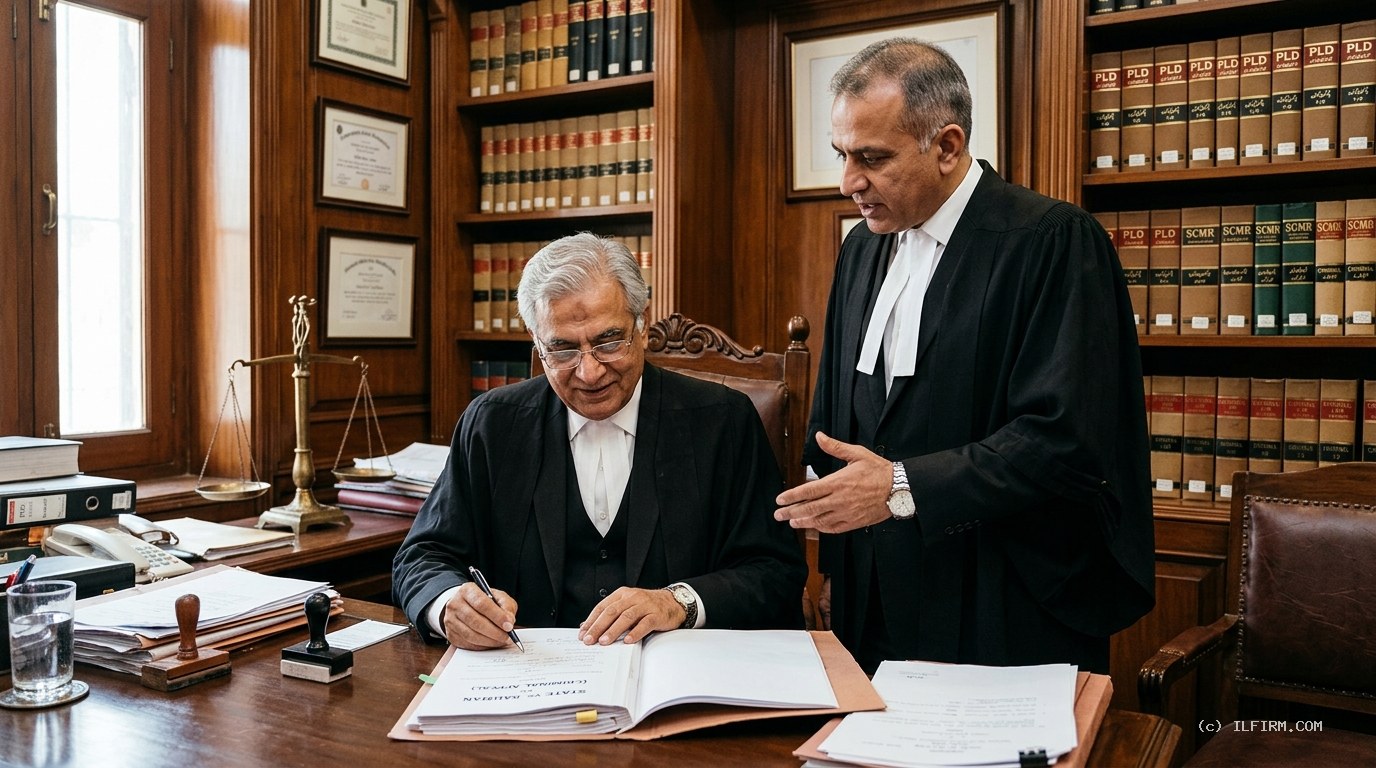
Judicial stamp paper, revenue verification documents, and case law reporters essential for instituting a declaratory suit under Section 42 of the Specific Relief Act 1877 (دستاویزاتِ ملکیت و ریونیو ریکارڈ برائے دعویٰ استقرارِ حق)
6. Formidable Strategic Defenses in Declaratory Litigation (دعویٰ استقرارِ حق کے خلاف اہم اور موثر قانونی دفاعات)
When defending against an unmerited, malicious, or delayed suit for declaration of title, defense counsel must deploy targeted statutory and equitable shields. A masterly written statement should weave together the following strategic defenses:
A. The Insuperable Bar of the Section 42 Proviso (امتناعی شرطیہ کی قانونی رکاوٹ)
The foremost statutory defense is that the plaintiff is not in actual or constructive possession of the subject property and has deliberately or inadvertently failed to seek consequential possession. Under *2018 SCMR 1684* and *PLD 2012 SC 730*, the omission of a prayer for possession when the plaintiff was out of possession on the date of the suit is an incurable defect that mandates dismissal of the suit. This objection should be raised as a preliminary objection to secure rejection of the plaint under Order VII Rule 11 CPC or summary dismissal.
B. Limitation Bar under Article 120 of the Limitation Act 1908 (قانونِ میعاد کی قدغن — 6 سالہ مدت)
Under Section 3 of the Limitation Act 1908 (دفعہ 3 ایکٹ میعادِ سماعت), every suit instituted after the prescribed period of limitation shall be dismissed, even although limitation has not been set up as a defense. If the defendant can demonstrate that the plaintiff had actual knowledge of the disputed mutation or hostile title assertion more than six years (چھ سال) prior to the institution of the suit—for instance, through previous litigation, revenue appeals, police reports, or local council notices—the suit for declaration is irrevocably time-barred under Article 120.
C. Bona Fide Purchaser for Value Without Notice: Section 41 TPA 1882 (تحفظ خریدار نیک نیت بلا اطلاع)
Where the defendant purchased the disputed land from an ostensible owner whose name was duly recorded in the public revenue records, the defendant is entitled to invoke the equitable protection of Section 41 of the Transfer of Property Act 1882 (دفعہ 41 ایکٹ منتقلیِ جائیداد — تحفظِ خریدارِ نیک نیت). To succeed, the defendant must prove:
- That the transferor was the ostensible owner with the express or implied consent of the real owner (e.g., the real owner allowed the transferor to manage the property and appear as owner in Jamabandis for years);
- That the transferee paid valuable consideration;
- That the transferee acted in good faith; and
- That the transferee took reasonable care and made diligent inquiries regarding the transferor’s power to make the transfer before executing the transaction.
D. Estoppel by Conduct & Acquiescence: Article 114 QSO 1984 (امرِ مانع تقریر اور رضا مندی کا اصول)
Under Article 114 of the QSO 1984 (آرٹیکل 114 قانونِ شہادت — امرِ مانع تقریر), when one person has, by his declaration, act, or omission, intentionally caused or permitted another person to believe a thing to be true and to act upon such belief, neither he nor his representative shall be allowed, in any suit or proceeding between himself and such person or his representative, to deny the truth of that thing. If the plaintiff stood by silently while the defendant constructed substantial commercial structures, incurred massive capital expenditure, or planted orchards on the land under a bona fide belief of ownership, the doctrine of estoppel and acquiescence bars the plaintiff from asserting title.
E. Bar of Benami Defense: Benami Transactions (Prohibition) Act 2017 (بے نامی ٹرانزیکشن ایکٹ 2017 کی ممانعت)
Historically, litigants frequently instituted declaratory suits claiming that the registered owner was merely a “Benamidar” (بے نامی دار) and that the plaintiff was the actual beneficial owner who paid the purchase money. With the promulgation of the Benami Transactions (Prohibition) Act 2017 (ایکٹ ممانعتِ بے نامی لین دین 2017), the defense and assertion of Benami ownership in civil proceedings has been completely prohibited and penalized, stripping prospective claimants of this classical subterfuge.
F. Res Judicata & Order II Rule 2 Bar (امرِ واقعہ اور آرڈر 2 رول 2 مجموعہ ضابطہ دیوانی کی پابندی)
Under Section 11 CPC (دفعہ 11 ضابطہ دیوانی — امرِ تصفیہ شدہ / Res Judicata), no court shall try any suit or issue in which the matter directly and substantially in issue has been directly and substantially in issue in a former suit between the same parties, or between parties under whom they or any of them claim, litigating under the same title, in a court competent to try such subsequent suit. Furthermore, under Order II Rule 2 CPC (آرڈر 2 رول 2 — پورے دعویٰ کا شامل کرنا), every suit shall include the whole of the claim which the plaintiff is entitled to make in respect of the cause of action. If the plaintiff omitted to sue in respect of any portion of his claim in a previous litigation, he cannot afterwards sue in respect of the portion so omitted without leave of the court.
7. Comparative Practice Matrices (تقابلی قانونی جدول و تقابلی تجزیہ)
To assist practitioners, judicial officers, and property owners in assessing strategic pathways, our chambers has synthesized three comprehensive comparative practice matrices:
Table 1: Primary Remedy vs. Alternative Statutory Remedies (بنیادی اور متبادل قانونی دادرسیوں کا تقابلی جائزہ)
| Legal Remedy (قانونی دادرسی) | Governing Statute & Forum (متعلقہ قانون و عدالت) | Scope & Core Objective (دائرہ کار و بنیادی مقصد) | Limitation Period (میعادِ سماعت) | Practical Advantages & Risks (فوائد و خطرات) |
|---|---|---|---|---|
| Suit for Declaration (دعویٰ استقرارِ حق) | Section 42 Specific Relief Act 1877; Civil Court (سول عدالت) | Authoritative judicial adjudication and confirmation of proprietary title, legal character, and cancellation of clouds. | 6 Years under Art. 120 Limitation Act (from accrual of right/cloud). | Advantage: Permanent, binding decree in rem/personam. Risk: Barred by Proviso if possession omitted when out of possession. |
| Summary Suit for Possession (دعویٰ بے دخلی سرسری) | Section 9 Specific Relief Act 1877; Civil Court (سول عدالت) | Immediate recovery of physical possession by a person dispossessed without consent otherwise than in due course of law. Title is NOT examined. | 6 Months from date of dispossession (ناقابلِ توسیع). | Advantage: Fast recovery without proving complex ownership title. Risk: Defendant can later file regular title suit; strict 6-month limit. |
| Illegal Dispossession Complaint (استغاثہ بے دخلی ناجائز) | Illegal Dispossession Act 2005 (Act XI of 2005); Court of Session (سیشن عدالت) | Criminal prosecution of land grabbers / illegal occupants coupled with emergency interim restoration of possession under Sec. 7 & 8. | No fixed statutory limit, but prompt filing required to show recent usurpation. | Advantage: Criminal punishment (up to 10 yrs) and speedy police-assisted recovery. Risk: Dismissed if bona fide civil title dispute exists. |
| Revenue Partition (تقسیمِ اراضی ریونیو) | Section 135 West Pakistan Land Revenue Act 1967; Revenue Court (Tehsildar) | Physical division, separation of Khata (کھاتہ الگ کرنا), and independent allotment of shares among recorded co-sharers. | Available at any time as long as joint tenancy/co-ownership subsists. | Advantage: Dissolves joint ownership and yields independent revenue record. Risk: If question of title is raised, Revenue Officer stays proceedings and refers to Civil Court. |
| Section 145 CrPC Proceedings (کارروائی نقصِ امن بابت جائیداد) | Section 145 Code of Criminal Procedure 1898; Executive Magistrate | Preventing imminent breach of public peace concerning land by attaching property or declaring actual possession within two months. | Immediate upon occurrence of breach of peace (within 2 months of dispossession). | Advantage: Emergency attachment stops violence and freezes status quo. Risk: Cannot adjudicate proprietary title or award final ownership decree. |
Table 2: Limitation Periods, Court Fees & Jurisdictional Valuation Matrix (میعادِ سماعت، کورٹ فیس اور تعینِ مالیت کا تفصیلی جدول)
| Action Type (نوعیتِ مقدمہ) | Limitation Period & Article (میعاد و قانونی شق) | Accrual of Right to Sue (بنائے دعویٰ کا آغاز) | Valuation Principle (تعینِ مالیت کا اصول) | Applicable Court Fee (قابلِ ادائیگی کورٹ فیس) |
|---|---|---|---|---|
| Pure Declaration of Title (محض استقرارِ حق ملکیت) | 6 Years (Article 120 Limitation Act 1908) | Date of actual knowledge of adverse entry or overt hostile denial by defendant. | Fixed by plaintiff under Suits Valuation Act 1887 for jurisdictional tier. | Fixed nominal court fee stamp under Schedule II Article 17 Court Fees Act. |
| Declaration with Consequential Possession (استقرارِ حق مع حصولِ قبضہ) | 12 Years (Articles 142 & 144 Limitation Act 1908) | Date of physical dispossession or when defendant’s possession became openly adverse. | Market value of property or 10x annual land revenue for agricultural land. | Ad valorem 7.5% subject to provincial statutory ceilings (e.g., KP Court Fees Act). |
| Cancellation of Registered Deed (تنسیخِ رجسٹری دستاویز) | 3 Years (Articles 91 & 92 Limitation Act 1908) | Date when facts entitling plaintiff to have instrument cancelled become known to him. | Stated consideration value of the challenged registered instrument. | Ad valorem on the valuation of the instrument sought to be cancelled. |
| Suit for Permanent Injunction (دعویٰ حکمِ امتناعی دوامی) | 6 Years (Article 120 Limitation Act 1908) | Date of threatened breach of obligation or physical invasion of property. | Valued by plaintiff at relief sought under Section 7(iv)(d) Court Fees Act. | Nominal fixed stamp fee or tiered percentage based on assessed valuation. |
Table 3: Mandatory Evidentiary Document Checklist (دستاویزی ثبوت اور ریونیو ریکارڈ کی لازمی چیک لسٹ)
| Document Description (دستاویز کی تفصیل) | Issuing Authority / Custodian (جاری کنندہ ادارہ / ریکارڈ روم) | Legal Purpose & Value (قانونی حیثیت و مقصد) | Mode of Proof under QSO 1984 (طریقہ ثبوت قانونِ شہادت) |
|---|---|---|---|
| Fard Malkiat / Jamabandi (فرد ملکیت / جمع بندی) | Arazi Record Center (PLRA/KP-LRMIS) or District Revenue Record Room (محافظ خانہ) | Establishes presumption of truth under Sec. 52 Land Revenue Act regarding recorded ownership and share ratio. | Certified copy (نقل مصدقہ) from revenue authority; calling Patwari Halqa with original Misal-e-Malkiat. |
| Mutation Sheet: Part Patwar & Part Sarkar (پرت پٹوار و پرت سرکار انتقال) | District Revenue Record Room / Tehsildar Office | Exposes procedural irregularities, lack of verification in Jalsa-e-Aam, forged signatures, or absent witnesses. | Production of original register; summoning Revenue Officer (Tehsildar) and Patwari who attested mutation. |
| Pedigree Table / Shajra Nasab (شجرہ نسب / مثلِ شجرہ) | District Revenue Record Room (محافظ خانہ ضلع) | Proves legal heirship, lineage from common ancestor, and exposes illegal exclusion of female or minor co-heirs. | Certified copy of Settlement Shajra Nasab (بندوبست شجرہ نسب) read under Art. 49 QSO 1984. |
| Khasra Girdawari Registers (رجسٹر خسرہ گرداوری) | Patwari Halqa / Tehsil Revenue Office | Proves continuous physical possession, crop cultivation, tenancy, and date of alleged hostile dispossession. | Certified extracts (نقل گرداوری) spanning consecutive harvest inspections; testimony of Halqa Patwari. |
| Aks Shajra Kishtwar (عکسی شجرہ کشتوار) | Tehsil Settlement Office / Patwari | Cadastral map showing exact physical location, geographic coordinates, access paths, and boundaries of Khasra parcels. | Certified trace map bearing official seal of Revenue Officer; verified by Local Commission on spot. |
| Consular Power of Attorney (قونصلر مختار نامہ برائے تارکینِ وطن) | Pakistan Embassy / High Commission / Consulate Abroad & MOFA Pakistan | Empowers trusted advocate or relative to institute, verify pleadings, and prosecute litigation on behalf of Overseas Pakistani. | Duly attested by diplomatic mission, verified and counter-stamped by Ministry of Foreign Affairs (MOFA), and registered/entered before Deputy Commissioner. |
8. Frequently Asked Questions by Litigants & Practitioners (اکثر پوچھے جانے والے سوالات و جوابات)
Q1: Can I file a suit for declaration if I am not in physical possession of the disputed land?
Legal Answer: You cannot file a suit for a bare declaration of title if you are out of possession. Under the mandatory Proviso to Section 42 of the Specific Relief Act 1877 and binding Supreme Court rulings (*2018 SCMR 1684*), a suit seeking solely a declaration of title without the consequential relief of possession is legally barred and liable to summary dismissal. You must expressly join a consequential prayer for recovery and restoration of possession under Section 8 SRA, and pay the requisite ad valorem court fees.
Q2: Does a revenue mutation (انتقال) prove absolute ownership in Pakistan?
Legal Answer: No. Settled law of the Supreme Court of Pakistan (*PLD 2021 SC 753*) establishes that a mutation is merely a fiscal entry in administrative records maintained for revenue assessment and collection. It neither confers, creates, nor extinguishes title. When a mutation is challenged, the person claiming benefit under it must prove the original underlying transaction (sale agreement, consideration payment, bona fide gift) through independent primary evidence.
Q3: What is the limitation period for challenging a fraudulent revenue mutation in Civil Court?
Legal Answer: Under Article 120 of the Limitation Act 1908, the period of limitation for a declaratory suit is 6 years. However, the Supreme Court has ruled (*2017 SCMR 1724*) that this limitation period does not run from the secret date when the fraudulent mutation was sanctioned, but from the date when the true owner acquires actual knowledge of the adverse entry or when there is an overt denial/threat to his possession.
Q4: How can Overseas Pakistanis protect land from illegal mutations while living abroad?
Legal Answer: Overseas Pakistanis should execute a special or general Power of Attorney (مختار نامہ) attested by the Pakistan Embassy or High Commission and verified by the Ministry of Foreign Affairs (MOFA) in Pakistan. Counsel can file a declaratory suit along with an urgent application for an interim status quo injunction under Order XXXIX Rules 1 & 2 CPC to restrain third-party transfers and revenue alterations during their absence.
Q5: What are the legal standards for proving an oral gift (ہبہ زبانی) of land in Pakistan?
Legal Answer: An oral gift of immovable property is subject to strict judicial scrutiny under Muslim jurisprudence and Qanun-e-Shahadat Order 1984. The beneficiary must prove three mandatory pillars: (1) clear and unequivocal declaration of gift by the donor (ایجاب), (2) acceptance of the gift by the donee (قبول), and (3) actual complete delivery of physical possession (تسلیم و قبض). In the case of female or illiterate donors, the beneficiary must also prove independent legal advice and voluntary execution (*PLD 2015 SC 356*).
Q6: What emergency remedies are available if the defendant starts building on my land during the lawsuit?
Legal Answer: You must immediately file an application for a Temporary Injunction under Order XXXIX Rules 1 & 2 CPC. If the adversary violates an existing status quo order, file an application under Order XXXIX Rule 2(3) CPC for attachment of property and civil imprisonment of the wrongdoer, accompanied by a police enforcement order under Section 151 CPC to halt illegal construction on the spot.
9. Chambers Consultation & Senior Advocate Legal Representation (چیمبرز سے قانونی رہنمائی و مشاورت)
Retain Senior Superior Court Advocates for Land Title Litigation
Navigating complex civil property disputes, defending ancestral land from predatory land mafias, and prosecuting declaratory suits under Section 42 of the Specific Relief Act 1877 demands bench-grade mastery of procedural codes and substantive precedents. At International Law Firm, our chambers comprise seasoned Senior Advocates of the High Courts and Supreme Court of Pakistan who provide formidable legal defense and strategic advocacy across KP, Islamabad, and Punjab.
We specialize in comprehensive land title representation, including:
- Civil suits for declaration of title, cancellation of fraudulent mutations, and permanent injunctions (Property Litigation & Land Disputes);
- Defending criminal land grabbing complaints and High Court appellate advocacy (Criminal Appeals & Sessions Defense);
- Constitutional writ petitions under Article 199 against illegal executive actions and administrative overreach (Constitutional Writ Petitions);
- Dedicated legal aid, consular power of attorney processing, and real-time asset protection for overseas clients (Overseas Legal Aid & Representation).