

District Court Civil Appeals
First appeals under Section 96 CPC and Civil Miscellaneous Appeals before the District Judge challenging trial court decrees and orders.
Comprehensive Legal Representation & Strategy
First Appellate Advocacy before District & Sessions Courts
When a trial court Civil Judge renders an adverse judgment, decree, or preliminary order, the first appeal under Section 96 of the Code of Civil Procedure (CPC) represents the most critical opportunity to reassess both questions of fact and principles of law. The first appellate court exercises comprehensive jurisdiction to re-read oral testimony, re-examine documentary evidence, and overturn faulty trial court determinations.
Our appellate advocacy team conducts forensic examinations of trial records (Roznamcha, depositions, exhibits) to formulate potent grounds of appeal before District Judges and Additional District Judges across Swat, Malakand, Buner, Dir, and Shangla.
Suspension of Decree Execution
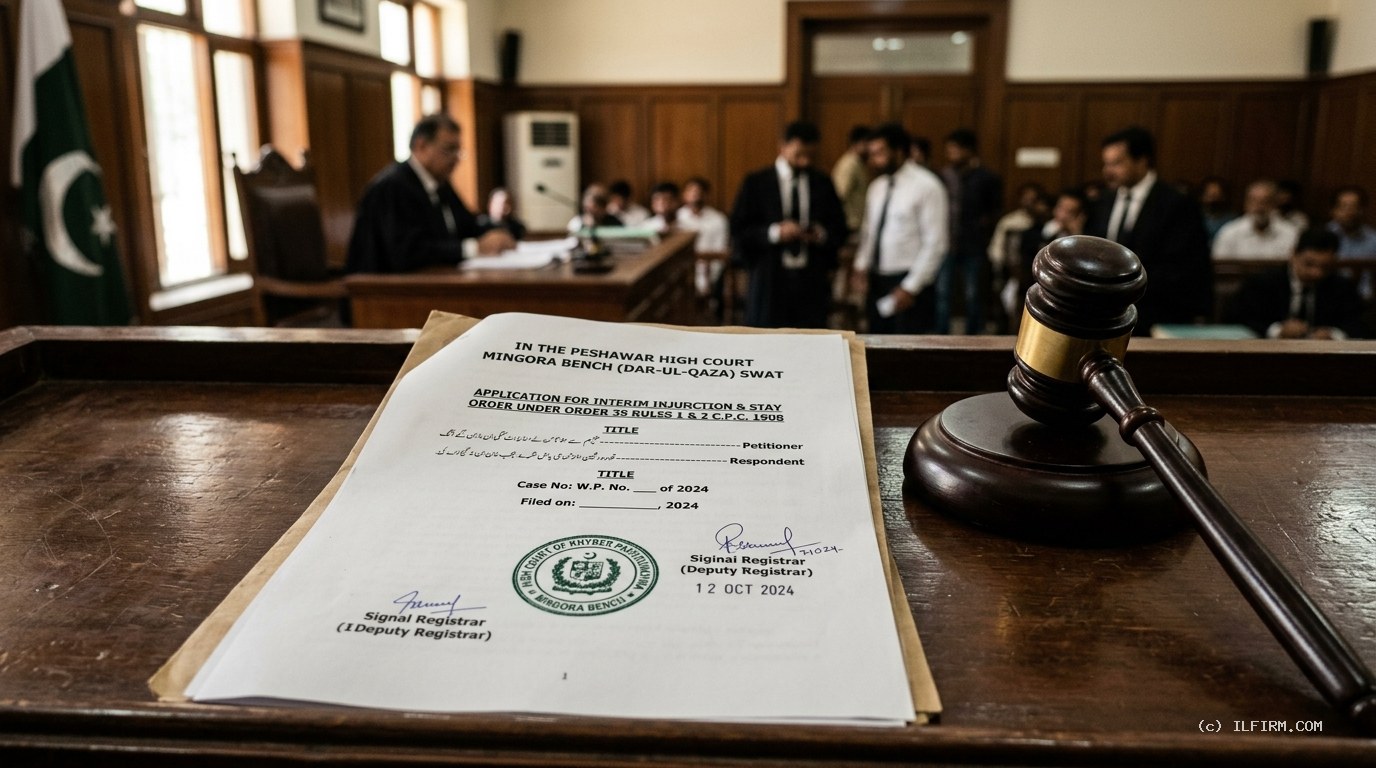
Alongside the memorandum of appeal, we immediately move applications under Order 41 Rule 5 CPC for the suspension of the execution of the lower court decree. This prevents the opposing party from taking possession, demolishing structures, or withdrawing funds while the appeal is pending adjudication.
Key Representation Scopes & Deliverables
Request Case Assessment
Direct matter evaluation by High Court Advocates within 24 hours.
Frequently Asked Legal Questions
Essential information regarding court timelines, documentation, and client representation.
What is the limitation period to file a civil appeal before the District Judge?
Under Article 152 of the Limitation Act, a regular civil appeal against a decree must be filed within thirty (30) days from the date of the decree.
Does filing an appeal automatically stop execution of the judgment?
No. Filing an appeal does not operate as an automatic stay. An explicit application under Order 41 Rule 5 CPC must be made, and the appellate court must grant a suspension order.
Can fresh evidence be produced at the appellate stage?
Generally no, unless the appellant satisfies the strict conditions of Order 41 Rule 27 CPC demonstrating that the trial court wrongfully refused evidence or that it was unavailable despite due diligence.