

Khula, Recovery of Dower & Child Maintenance in Pakistan: Family Courts Act 1964 Trial Procedure & Superior Court Precedents (تنسیخ نکاح بہ سبب خلع، وصولی مہر و خرچہ نان و نفقہ نابالغان: فیملی کورٹس ایکٹ 1964ء کا عدالتی طریقہ کار اور اعلیٰ عدالتی نظائر)
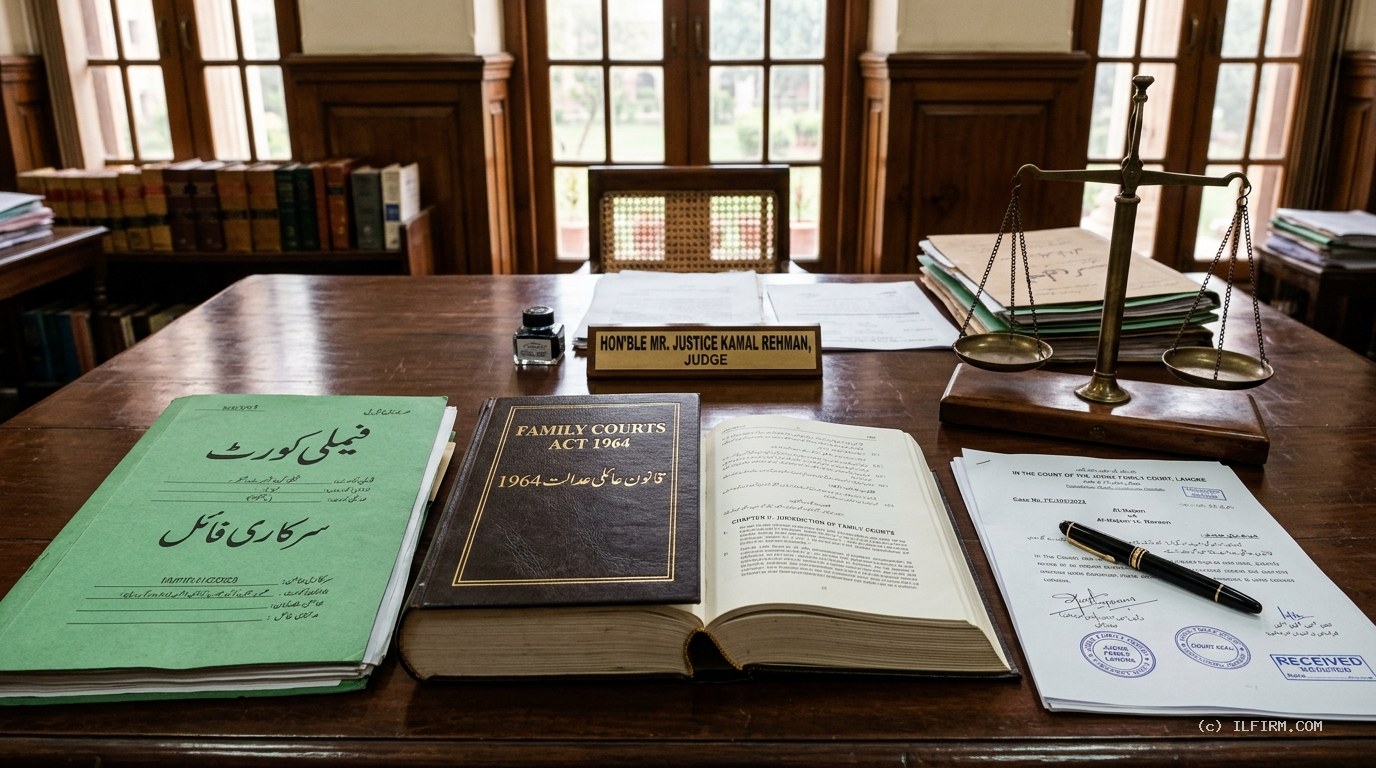
1. Executive Summary & Jurisprudential Foundations (تعارفی خلاصہ و بنیادی فلسفہِ قانونِ ازدواج)
In the constitutional, statutory, and Islamic jurisprudence of the Islamic Republic of Pakistan, marriage is fundamentally conceived not as an indissoluble sacrament, but as an enforceable, sacred civil contract known as Aqd-e-Nikah (عقدِ نکاح). While Islamic law elevates the marital union as a cornerstone of social tranquility, moral cohesion, and familial stability, it simultaneously recognizes human fallibility and the harsh reality of irreconcilable domestic discord. Where the mutual affection between spouses completely disintegrates and degenerates into profound, unyielding aversion—legally characterized as Ikrah (نفرت و ناپسندیدگی)—compelling a woman to remain shackled within a hollow marital bond is treated by Pakistani superior courts as an intolerable injustice that directly contravenes the divine injunctions of the Holy Quran to maintain the Limits Ordained by Allah (حدود اللہ).
To mitigate such domestic trauma and dismantle archaic patriarchal bottlenecks, the Parliament and provincial legislatures enacted specialized procedural and substantive mechanisms, principally codified in the West Pakistan Family Courts Act, 1964 (فیملی کورٹس ایکٹ 1964ء) and the Muslim Family Laws Ordinance, 1961 (مسلم فیملی لاز آرڈیننس 1961ء). Under this legal framework, a Muslim wife possesses an indefeasible, fundamental right to seek judicial dissolution of her marriage through Khula (تنسیخِ نکاح بہ سبب خلع). Unlike traditional adversarial civil litigation governed by the technical encumbrances of ordinary procedural codes, a claim for Khula does not require the wife to establish culpable guilt, criminal adultery, or extreme physical maltreatment with mathematical certainty; her solemn, unequivocal deposition before the Family Judge that she harbors an incurable hatred toward her husband and can no longer cohabit with him within divine bounds is judicially sufficient to sever the marital tie.
However, the judicial dissolution of marriage does not operate in an economic vacuum. The termination of marital cohabitation inevitably triggers consequential, highly contested monetary and custodial obligations. Chief among these are the statutory and contractual remedies for the Recovery of Dower (وصولیِ حق مہر), the return of dowry articles and bridal paraphernalia denominated as Jahez (استردادِ سامانِ جہیز), and the paramount, non-negotiable obligation of the father to provide monthly Child Maintenance (خرچہ نان و نفقہ نابالغان) as well as past spousal maintenance for the wife. Historically, aggrieved women were forced to navigate a labyrinth of disjointed legal forums, initiating separate civil suits for dower, criminal complaints for maintenance under the Code of Criminal Procedure, and declaratory suits before ordinary civil judges, resulting in decades of debilitating procedural delay.
The contemporary Pakistani judicial dispensation, reinforced by landmark precedents of the Supreme Court of Pakistan and provincial High Courts, has completely transformed this procedural landscape. Through a consolidated plaint instituted under Section 7 of the Family Courts Act 1964, a claimant wife can simultaneously aggregate multiple causes of action before a single, specialized Family Court (عدالتِ خاندانی). Furthermore, progressive legislative amendments, notably Section 17-A of the Act, have vested Family Judges with peremptory powers to fix interim child and spousal maintenance at the earliest stage of litigation, backed by the severe sanction of striking off the defendant’s defense upon default. At the constitutional level, Articles 9 (Right to Life), 14 (Inviolability of Dignity), 25 (Equality of Citizens), and 35 (Protection of Marriage, Family, Mother and Child) of the Constitution of the Islamic Republic of Pakistan, 1973 (آئینِ پاکستان 1973ء) serve as an overarching jurisprudential shield, mandating superior courts to interpret family legislation purposively to protect women and minor children from economic starvation and protracted litigation.
2. Statutory Architecture & Legislative Codification (قانونی ڈھانچہ و متعلقہ مجموعہ ہائے قوانین)
Matrimonial adjudication in Pakistan is governed by an interlocking hierarchy of specialized substantive and procedural enactments. Mastery of this statutory architecture is indispensable for trial advocates and litigants navigating family disputes across trial benches, appellate forums, and the writ jurisdiction of the High Courts.
A. The West Pakistan Family Courts Act, 1964 (Act XXXV of 1964) (فیملی کورٹس ایکٹ 1964ء)
The Family Courts Act 1964 serves as the primary procedural charter governing all family litigation in Pakistan. Designed as a quasi-judicial, beneficial statute, it purposefully strips away the archaic technicalities that traditionally plagued the civil justice system. The crucial statutory sections include:
- Section 5 & Schedule I (خصوصی دائرہ اختیار): Bestows exclusive, plenary jurisdiction upon the Family Court over nine specific matrimonial and domestic causes of action: (1) Dissolution of marriage including Khula; (2) Dower; (3) Maintenance; (4) Restitution of conjugal rights; (5) Custody of children and visitation rights; (6) Guardianship; (7) Jactitation of marriage; (8) Dowry articles and personal property; and (9) Custody matters connected with domestic violence. Ordinary civil courts are completely barred from entertaining these causes.
- Section 7 (دائرہ عمل و یکجا فردِ دعویٰ): Prescribes the institution of suits by presentation of a plaint. It permits the claimant to join all ancillary reliefs (Khula, Dower, Dowry, Maintenance, Custody) within a single comprehensive legal proceeding, thereby eliminating multiplicity of litigation. Crucially, under Rule 6 of the West Pakistan Family Courts Rules, 1965 (فیملی کورٹس رولز 1965ء), territorial jurisdiction is uniquely tailored to favor the wife; she is statutory entitled to institute her suit in the Family Court within whose local limits she ordinarily resides at the time of filing, regardless of where the marriage was solemnized or where the matrimonial home was situated.
- Section 8 (طلبی و جدید طریقہ کارِ ترسیلِ سمن): Outlines an aggressive, multi-channel service mechanism, encompassing registered postal service, court bailiff, courier services, and substituted service via urgent newspaper publication under Section 8(1)(c) to defeat evasion tactics by recalcitrant respondents.
- Section 10 & Section 10(4) (قبل از سماعت مصالحت و فوری ڈگری خلع): Mandates pre-trial proceedings wherein the Family Judge must conduct an informal, confidential reconciliation session between the spouses. Sub-section (4), introduced via progressive provincial amendments, represents a watershed legislative command: if the husband refuses or fails to reconcile, or if the wife adamantly asserts that she cannot live with him, the Family Court is statutorily bound to immediately pass a preliminary decree for dissolution of marriage on the ground of Khula, without subjecting the woman to a protracted trial, while deferring financial claims (dower, dowry, maintenance) for regular evidence.
- Section 12 & 12-A (بعد از شہادت مصالحت اور چھ ماہ میں حتمی فیصلہ): Prescribes post-trial reconciliation following the conclusion of evidence, followed by the pronouncement of judgment and decree. Section 12-A establishes a strict statutory timeline, directing Family Courts to conclude trials and dispose of suits expeditiously within a maximum period of six months from the date of appearance.
- Section 13 (نفاذِ ڈگری و تادیبی اختیارات): Equips the Family Judge with coercive execution powers equivalent to an executing civil court and Judicial Magistrate. Decrees for money (dower, maintenance) can be executed through attachment of movable and immovable property, freezing of bank accounts, recovery as arrears of land revenue, and civil imprisonment of the judgment debtor for up to one year.
- Section 14 (حقِ اپیل اور قطعی احکامات): Regulates appellate remedies before the District Judge. Crucially, Section 14(2) bars any appeal against a decree for dissolution of marriage, except an appeal regarding the quantum of dower surrendered or restored as Zar-e-Khula (زرِ خلع), ensuring that the severing of marital status achieves prompt finality.
- Section 17-A (عبوری خرچہ نان و نفقہ اور خارجِ دفاع): Enacts an obligatory statutory duty upon the Family Court to fix interim monthly maintenance for the minor children and the wife at the very threshold of the proceedings. Under Section 17-A(4), if the father/husband fails to deposit the fixed maintenance amount on or before the fourteenth day of each calendar month, the court possesses no discretion other than to immediately strike off his defense and proceed to decree the claim against him.
B. The Dissolution of Muslim Marriages Act, 1939 (Act VIII of 1939) (تنسیخِ نکاح ایکٹ 1939ء)
This historic enactment codifies the substantive statutory grounds upon which a married Muslim woman may seek judicial termination of marriage, distinct from or in conjunction with Khula. Under Section 2 of the Act, actionable grounds include:
- Section 2(ii): The husband has neglected or failed to provide for her maintenance for a continuous period of two years.
- Section 2(iii): The husband has been sentenced to imprisonment for a period of seven years or upwards.
- Section 2(iv): The husband has failed to perform, without reasonable cause, his marital obligations for a period of three years.
- Section 2(viii): Cruelty by the husband, encompassing habitual physical assault, association with persons of ill-repute, forcing the wife to lead an immoral life, disposing of her property or preventing her from exercising her legal rights, obstructing her religious observance, or failure to treat co-wives equitably in accordance with Islamic injunctions.
- Section 2(ix): Any other ground recognized as valid for dissolution of marriage under Muslim personal law, which directly incorporates the doctrine of Khula based on insurmountable mutual discord.
C. The Muslim Family Laws Ordinance, 1961 (Ordinance VIII of 1961) (مسلم فیملی لاز آرڈیننس 1961ء)
The MFLO 1961 introduces essential administrative oversights into matrimonial relations. Sections 7 and 8 mandate that upon the pronouncement of Talaq or the passing of a court decree for Khula, formal written notice must be transmitted to the Chairman of the local Arbitration Council / Union Council (ثالثی کونسل / یونین کونسل). The Chairman must constitute an Arbitration Council to explore reconciliation within a statutory window of 90 days. If reconciliation fails or remains unachieved upon the expiration of 90 days from the date of notice, the dissolution becomes legally irrevocable, paving the way for the issuance of the official Divorce Effective Certificate (طلاق / خلع مؤثر سرٹیفکیٹ). Furthermore, Section 10 governs the payment of dower, mandating that where no specific details are recorded in the Nikahnama regarding the mode of payment, the entire dower amount is presumed to be prompt dower payable on demand.
3. Evidentiary Rigour & Burden of Proof (معیارِ ثبوت، بارِ ثبوت اور قانو نِ شہادت کے تقاضے)
A defining characteristic of matrimonial jurisprudence in Pakistan is the deliberate statutory exclusion of the strict, hyper-technical rules of the Code of Civil Procedure, 1908 (مجموعہ ضابطہ دیوانی 1908ء) and the Qanun-e-Shahadat Order, 1984 (قانونِ شہادت آرڈر 1984ء). By virtue of Section 17 of the Family Courts Act 1964, the rigid evidentiary technicalities that dominate ordinary commercial or property litigation do not apply to Family Courts. However, superior courts have consistently clarified that this exclusion does not license arbitrary adjudication; the Family Court remains strictly anchored to fundamental principles of equity, justice, fair play, and the standard of Preponderance of Probabilities (غلبہِ ظن و توازنِ ثبوت).
A. Proving Grounds for Khula vs. Return of Zar-e-Khula (خلع کا بارِ ثبوت اور زرِ خلع)
The evidentiary burden required to establish an entitlement to Khula is remarkably distinct from conventional civil or criminal claims. The wife is not required to adduce corroborative eyewitness testimony or documentary evidence demonstrating specific acts of physical brutality or infidelity. In the eyes of the law, the concept of Aversion and Discord (نفرت و مخالفت) resides within the subjective psychological consciousness of the woman. If the wife appears in the witness box and resolutely testifies that she has developed an intense, insurmountable dislike for her husband such that she cannot live with him within the limits prescribed by Allah, her statement under oath is conclusive proof of the breakdown of the marriage. The superior courts have firmly held that forcing a woman into an unwanted physical and emotional union when her heart has rejected her husband constitutes an intolerable violation of her fundamental human dignity.
However, a critical evidentiary bifurcation arises concerning the financial consideration for Khula—denominated as Zar-e-Khula (زرِ خلع). Under classical Islamic jurisprudence and Pakistani statutory modifications, where the dissolution of marriage is granted purely on the ground of Khula (unaccompanied by proof of the husband’s statutory fault or cruelty under the Dissolution of Muslim Marriages Act 1939), the wife is legally required to surrender or return the economic benefits she received from the husband in consideration of the marriage. Here, the burden of proof operates as follows:
- Deferred Dower (مہر مؤجل): If the dower remains unpaid, the wife forfeits her right to recover up to 50% of the deferred dower (under provincial amendments such as the Punjab Family Courts Amendment 2015), or the entire deferred dower under traditional principles, depending on the provincial statutory framework.
- Prompt Dower (مہر معجل): If the wife has already received prompt dower, she may be directed to return up to 25% or 50% thereof to the husband as Zar-e-Khula.
- Husband’s Burden of Proof: If the husband claims that he gifted substantial immovable property, heavy gold ornaments, or cash assets to the wife as consideration for the marriage, the evidentiary burden rests entirely on him to prove the actual transfer and delivery of such benefits through registered instruments, banking transactions, or credible documentary receipts. Vague, self-serving oral assertions by the husband will not suffice to burden the wife with an inflated Zar-e-Khula.
- Dissolution on Husband’s Fault: If the wife establishes through evidence that the dissolution was necessitated by the husband’s cruelty, desertion, or failure to maintain her, the court will grant dissolution without requiring the surrender of any portion of her dower.
B. Evidentiary Weight of the Registered Nikahnama (نکاح نامہ کی قانونی و ثبوتی حیثیت)
The Nikahnama (نکاح نامہ) is not merely a ceremonial certificate; it is a solemn, registered public document under Section 5 of the MFLO 1961. As affirmed repeatedly by the Supreme Court of Pakistan (notably in 2022 SCMR 1225), entries recorded in Columns 13 through 17 of the Nikahnama carry a strong Statutory Presumption of Correctness (قانونی قیاسِ صحت):
- Column 13 (مقدارِ مہر): Specifies the total quantum of dower. Once an amount or specific property is entered in this column, it constitutes conclusive prima facie proof of the agreed dower obligation.
- Column 14 (مہر معجل یا مؤجل): Defines whether the dower is prompt (payable immediately upon demand) or deferred (payable upon dissolution or a stipulated date). Where this column is left blank or ambiguous, Section 10 of the MFLO 1961 mandates that the entire dower is presumed to be prompt dower.
- Column 15 (جائیداد بدلے مہر): Details any immovable or movable property transferred in lieu of dower. If land or a house is specified, Pakistani superior courts hold that the entry in Column 15 operates as a binding title transfer document, exempt from ordinary compulsory registration under the Registration Act 1908, conferring proprietary title directly upon the wife.
- Column 16 & 17 (خصوصی شرائط و تفویضِ طلاق): Governs delegated right of divorce (Talaq-e-Tafweez) and special conditions. If the husband alleges that the dower entries were forged or altered post-solemnization, the legal burden rests squarely upon him to initiate rigorous forensic examination or present overwhelming proof of fraud. Mere oral denial by the husband cannot displace the sanctity of the registered Nikahnama.
C. Burden of Proof in Child Maintenance & Assessing Financial Capacity (نان و نفقہ کا بارِ ثبوت اور مالی استعداد کا تعین)
In claims for Child Maintenance (خرچہ نان و نفقہ نابالغان), the legal doctrine is categorical: the duty of a Muslim father to maintain his legitimate children is absolute, sacred, and independent of any marital estrangement or divorce between the parents. The mother’s financial independence or personal wealth cannot absolve the father of this primary liability. In determining the quantum of maintenance, the Family Court must balance two primary factors: the genuine socio-educational requirements of the children and the financial capacity and social status of the father.
Because recalcitrant fathers routinely conceal their true income, hide business assets, and register properties benami, superior courts have established progressive evidentiary guidelines to prevent injustice:
- Presumption of Ability: An able-bodied adult male is legally presumed capable of earning a respectable livelihood. The Supreme Court has ruled (e.g., in 2023 SCMR 145) that a father cannot escape his statutory obligation by merely pleading unemployment, commercial downturn, or poverty. If he is physically capable, he must work to feed his children.
- Documentary Proof of Child’s Needs: The custodial mother must produce concrete documentary evidence establishing the children’s actual living expenses, including school fee challans, textbook invoices, medical bills, utility expenses, clothing receipts, and transportation costs.
- Unearthing the Father’s Hidden Wealth: Under Section 17-A of the Family Courts Act 1964, the Family Judge is empowered to summon official records, directing the Federal Board of Revenue (FBR) to produce tax returns, commanding commercial banks to submit statement of accounts, and requiring motor vehicle and land revenue authorities to disclose ownership records. Furthermore, secondary evidence such as lifestyle indicators, international travel history, and business digital footprints are fully admissible to establish the father’s real social status.
4. Binding Superior Court Precedents & Ratio Decidendi (اعلیٰ عدالتی نظائر اور طے شدہ عدالتی فیصلے)
The jurisprudence governing Khula, recovery of dower, and child maintenance in Pakistan is anchored in authoritative, binding rulings delivered by the Supreme Court of Pakistan and the provincial High Courts. These landmark precedents serve as vital judicial benchmarks that every legal practitioner must master:
1. Mst. Bilqis Fatima v. Najm-ul-Ikram Qureshi (PLD 1967 Supreme Court 97) (بلقیس فاطمہ کیس – خلع بطور غیر مشروط شرعی حق)
Forum: Full Bench, Supreme Court of Pakistan.
Ratio Decidendi: This monumental judgment forms the constitutional foundation of Khula in South Asian Islamic jurisprudence. The Supreme Court authoritatively settled that the right of a Muslim wife to seek Khula is an independent, divine right conferred by the Holy Quran. The court held that if a woman firmly states that she harbors an aversion towards her husband and cannot live with him within the limits ordained by Allah, the court has the judicial authority to dissolve the marriage even if the husband adamantly refuses to consent. The court observed that forcing a woman to cohabit with a man she abhors is an unnatural coercion contrary to the spirit of Islam. The only condition attached to Khula is the equitable restoration of material benefits received from the husband (Zar-e-Khula).
2. Mst. Khurshid Bibi v. Baboo Muhammad Amin (PLD 1967 Supreme Court 97 / PLD 1959 SC 456) (خورشید بی بی بنام بابو محمد امین – زرِ خلع اور شرعی تقاضے)
Forum: Supreme Court of Pakistan.
Ratio Decidendi: Reaffirmed the doctrine that Khula is not contingent upon the fault of the husband. The apex court held that where the court arrives at the judicial satisfaction that the marital relationship has broken down irreparably, it must decree Khula. The court further elaborated the principles governing Zar-e-Khula, clarifying that the court cannot award punitive damages to the husband; compensation is strictly limited to the return of gifts or dower actually received in consideration of the marriage.
3. Mst. Humaira v. Additional District Judge (2021 SCMR 1640) (وصولیِ مہرِ معجل اور زوجہ کا غیر مشروط استحقاق)
Forum: Supreme Court of Pakistan.
Ratio Decidendi: The Supreme Court held that prompt dower (Mehr Mu’ajjal) is an unconditional debt due from the husband to the wife from the very moment of marriage solemnization. The wife possesses an unencumbered legal right to demand and recover prompt dower at any time, even before consummation of marriage. The court categorically ruled that the husband cannot defeat a suit for recovery of prompt dower by filing a counter-suit for restitution of conjugal rights, nor can he condition payment upon the wife’s submission to his physical custody.
4. Muhammad Aslam v. Mst. Shabana Parveen (2020 SCMR 209) (والد کی بچوں کے خرچہ کی مقدس اور آئینی ذمہ داری)
Forum: Supreme Court of Pakistan.
Ratio Decidendi: The apex court reinforced that the obligation of a father to provide maintenance for his minor children is absolute, continuous, and sacred. Maintenance is not a mere subsistence allowance of dry bread; it encompasses comprehensive financial support, including quality education, comfortable housing, medical treatment, clothing, transport, and moral upbringing corresponding to the father’s social stature. The court ruled that the father’s obligation continues for sons until they attain the age of majority (18 years) and for unmarried daughters until they are legally married, irrespective of who holds custodial custody.
5. Naveed Ahmad v. Mst. Bushra & Others (2019 SCMR 1634) (دفعہ 17-اے فیملی کورٹس ایکٹ – عبوری خرچے کے عدم ادائیگی پر خارجِ دفاع کا لازمی حکم)
Forum: Supreme Court of Pakistan.
Ratio Decidendi: Clarified the strict mandatory nature of Section 17-A(4) of the West Pakistan Family Courts Act 1964. The Supreme Court held that the legislative intent behind Section 17-A is to protect destitute women and minors from starvation during the pendency of litigation. Where the Family Court directs the father to deposit interim maintenance by the 14th of every month and the father commits default without extraordinary, justifiable cause, the Family Court has no judicial discretion to grant infinite indulgences; it must immediately strike off the defendant’s defense and pass a decree in favor of the plaintiff.
6. Tariq Mahmood v. Mst. Rehana Kausar (2022 SCMR 1225) (نکاح نامہ کے کالمز کا ثبوتی وزن اور قانونی قیاس)
Forum: Supreme Court of Pakistan.
Ratio Decidendi: Settled that the Nikahnama is a registered document executed by a licensed Nikah Registrar under statutory authority. The entries in Columns 13 to 17 carry a presumption of truth under law. A party challenging the veracity of these entries bears a heavy burden of proof to establish fraud or forgery through concrete, unimpeachable evidence. Oral testimony disputing the agreed dower or property transferred in lieu of dower cannot override the written registered recitals.
7. Peshawar High Court (Mingora Bench / Dar-ul-Qaza Swat) Precedents (2022 CLC 1420 & PLD 2021 Peshawar 118) (خیبر پختونخوا و سوات کے عائلی تنازعات میں خصوصی دائرہ اختیار)
Forum: Peshawar High Court (Mingora Bench Dar-ul-Qaza, Swat).
Ratio Decidendi: Addressed territorial jurisdiction and interim relief in the context of Khyber Pakhtunkhwa and provincially administered regions. The High Court held that Rule 6 of the Family Courts Rules 1965 must be liberally interpreted: if a displaced woman resides in Swat or Malakand Division due to domestic violence, the Family Court at Swat possesses full territorial jurisdiction to entertain her consolidated suit for Khula, dower, and child maintenance. Furthermore, the court held that execution proceedings under Section 13 must proceed with utmost speed, utilizing detention in civil prison to recover long-standing maintenance arrears from recalcitrant fathers.
5. Procedural Roadmap: From Institution to Execution (مرحلہ وار عدالتی طریق کار: دعویٰ دائر کرنے سے ڈگری کے نفاذ تک)
Navigating a family litigation in Pakistan requires disciplined adherence to a structured statutory sequence. Below is the comprehensive step-by-step trial roadmap governed by the West Pakistan Family Courts Act 1964 and Muslim Family Laws Ordinance 1961:
Step 1: Pre-Litigation Legal Notice (قانونی نوٹس برائے ادائیگی مہر و خرچہ نان و نفقہ)
While not strictly mandatory under the Family Courts Act 1964, issuing a formal legal notice through an Advocate of the High Court is a powerful strategic prelude. The notice calls upon the husband to immediately pay the outstanding prompt dower, release gold and dowry articles, and remit monthly maintenance for the minor children. This establishes an incontrovertible evidentiary baseline demonstrating demand and refusal, which is invaluable for claiming past maintenance and defending against false claims of amicable cohabitation.
Step 2: Drafting the Consolidated Plaint under Section 7 (فردِ دعویٰ کی تیاری و یکجا کارروائی)
The claimant wife, through her legal counsel, drafts a comprehensive consolidated plaint uniting all permissible causes of action: (1) Suit for Dissolution of Marriage through Khula; (2) Suit for Recovery of Dower; (3) Suit for Recovery of Dowry Articles or their alternate market cash value; (4) Suit for Past and Future Maintenance of the wife and minor children; and (5) Custody / Guardianship petitions if applicable. The plaint must specify the exact matrimonial timeline, grounds of aversion, breakdown of cohabitation, details of dower as recorded in the Nikahnama, comprehensive inventory of dowry articles with market valuation, and detailed computation of child expenses. All supporting annexures, including the certified Nikahnama, NADRA Birth Certificates, Form-B, and child expense receipts, must be attached.
Step 3: Presentation and Territorial Jurisdiction under Rule 6 (دائرگیِ دعویٰ اور مقامی دائرہ اختیار)
The suit is presented before the Senior Civil Judge / Judge Family Court. Pursuant to Rule 6 of the West Pakistan Family Courts Rules 1965, the suit can be validly instituted where the wife ordinarily resides. A nominal court fee of Rs. 15 is affixed on the plaint (pursuant to the Court Fees Act 1870, Schedule II, Article 13), exempting indigent women from ad-valorem civil court fees.
Step 4: Summons, Notices & Modern Substituted Service under Section 8 (تعمیلِ سمنات اور اخباری اشتہار)
The Family Court immediately issues summons to the defendant husband via registered post with acknowledgment due (AD), court process server, and registered courier service. If the defendant deliberately evades service, the court promptly orders substituted service via publication in an approved daily newspaper under Section 8(1)(c). If the husband fails to appear despite newspaper publication, he is proceeded against ex-parte.
Step 5: Written Statement & List of Relied Documents under Section 8(6) (جواب دعویٰ اور دستاویزی شواہد)
Upon appearance, the defendant husband is required to file his written statement along with a list of witnesses and copies of all documents in his possession. He must specifically address each allegation, raise preliminary legal objections, and state his financial defense regarding dower and maintenance.
Step 6: Mandatory Pre-Trial Reconciliation & Immediate Decree of Khula under Section 10(4) (قبل از سماعت مصالحت و فوری ڈگری خلع)
The Family Judge conducts an informal in-camera pre-trial reconciliation session to ascertain if the marriage can be salvaged. If the wife unequivocally refuses to reconcile and insists on separation, the court records the failure of reconciliation. Under Section 10(4) of the Family Courts Act 1964, the Family Judge must immediately pronounce a preliminary decree dissolving the marriage on the ground of Khula. The wife’s marital status is severed forthwith, while the disputed financial claims for dower, dowry, and maintenance proceed to full trial.
Step 7: Fixation of Interim Child & Spousal Maintenance under Section 17-A (عبوری خرچے کا فوری تعین)
Simultaneously with or immediately following the pre-trial stage, the Family Court performs its statutory duty under Section 17-A to fix tentative interim maintenance for the minor children and the wife (for her iddat period). The court directs the father to deposit this sum directly into court on or before the 14th of every month. If the father defaults, his defense is summarily struck off under Section 17-A(4).
Step 8: Framing of Issues & Recording of Evidence under Section 11 (وضع تنقیحات اور قلمبندیِ شہادت)
The court frames specific legal and factual issues (Tanqeehat / تنقیحات) concerning the recovery of dower, market value of dowry articles, and the final quantum of child maintenance. Evidence is recorded without technical procedural delays: the plaintiff and her witnesses submit examination-in-chief via sworn affidavits and undergo cross-examination by the defense counsel. The defendant then produces his oral and documentary rebuttal evidence.
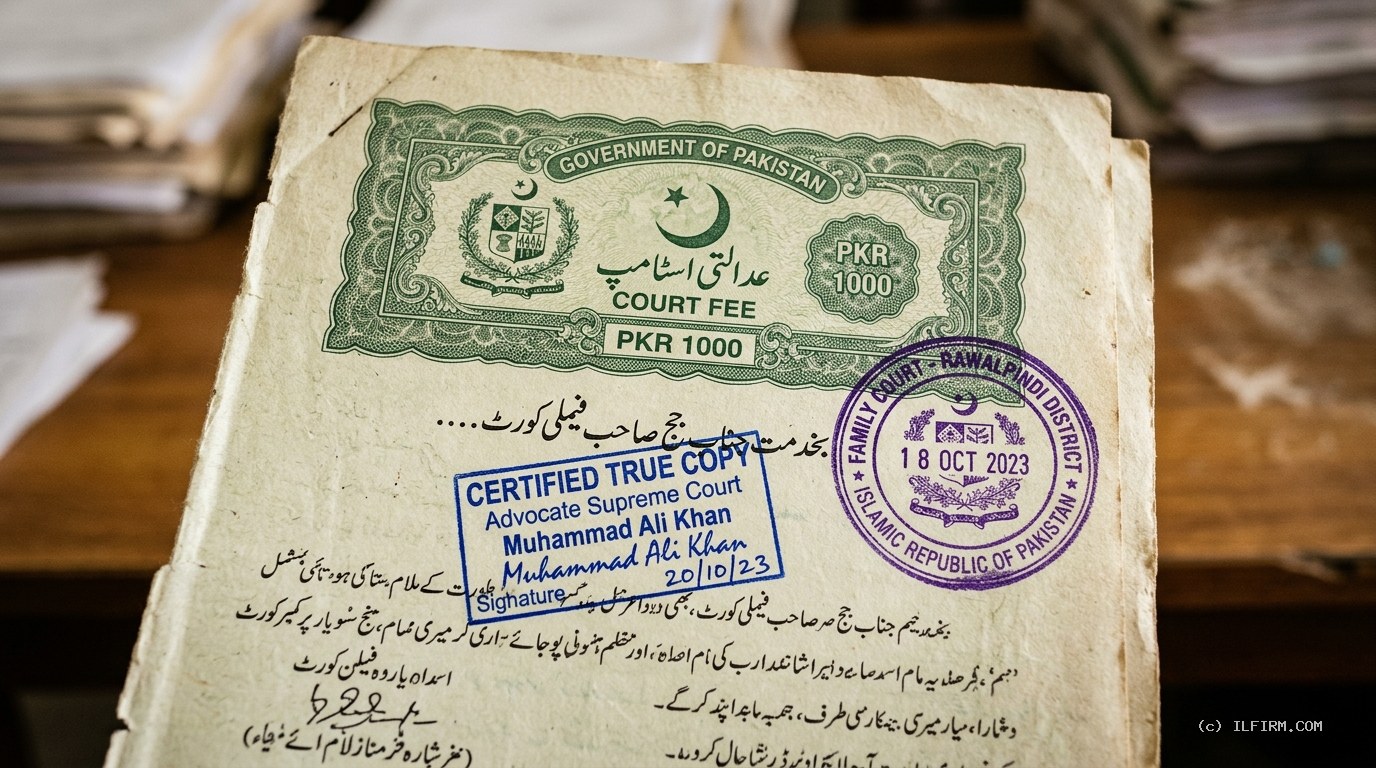
Authentic Pakistani judicial stamp paper and Family Court certified petition docket under the West Pakistan Family Courts Act, 1964 (دستاویزی ثبوت: عدالتی اسٹامپ پیپر اور خلع و خرچہ نان و نفقہ کی مصدقہ فردِ دعویٰ)
Step 9: Post-Trial Reconciliation & Final Judgment / Decree under Section 12 (بعد از شہادت مصالحت و حتمی فیصلہ و ڈگری)
Following the conclusion of evidence, the court makes a final statutory effort at reconciliation under Section 12. Upon its inevitable failure, the court hears final arguments from both learned counsel and delivers its comprehensive judgment and decree, determining the final dower recovery, dowry article restitution, and permanent monthly child maintenance with a mandatory annual percentage increment (typically 10% to 20% annually to account for inflation).
Step 10: Union Council Proceedings for Effective Divorce Certificate (یونین کونسل نوٹس اور مؤثر سرٹیفکیٹ کا اجراء)
Pursuant to Section 7 and 8 of the MFLO 1961, a certified copy of the Khula decree is transmitted to the Chairman of the relevant Union Council / Arbitration Council. The Chairman issues notices to the parties for appearance within 90 days. Upon the expiration of 90 days, the Union Council formally issues the Khula Muathir Certificate (خلع مؤثر سرٹیفکیٹ), enabling the woman to update her NADRA marital status and legally enter into a new marriage.
Step 11: Execution of the Decree under Section 13 (نفاذِ ڈگری، ضبطیِ جائیداد اور گرفتاری)
If the judgment debtor fails to satisfy the financial decree voluntarily, the decree-holder files an execution petition under Section 13 of the Family Courts Act 1964. The Family Court exercises plenary powers: it issues warrants of attachment against the judgment debtor’s bank accounts, vehicles, and immovable property, directs his employer to deduct maintenance directly from salary, and issues non-bailable warrants for his arrest and committal to civil prison for non-payment.
Step 12: Statutory Appeal under Section 14 & Constitutional Writ Jurisdiction (حقِ اپیل اور ہائی کورٹ کی رٹ پٹیشن)
While the dissolution of marriage through Khula cannot be appealed, decrees concerning dower, dowry, and maintenance are appealable before the District Judge within 30 days under Section 14. Against the final appellate judgment of the District Court, no second appeal lies; however, an aggrieved party can invoke the supervisory Constitutional Writ Jurisdiction (آئینی رٹ پٹیشن) of the High Court under Article 199 of the Constitution of Pakistan, 1973 (آرٹیکل 199 آئینِ پاکستان) on grounds of jurisdictional defect, patent illegality, or perverse misreading of evidence.
6. Formidable Strategic Defenses for Claimants, Husbands & Non-Custodial Parents (مؤثر قانونی و تزویراتی دفاع: مدعیہ، شوہر اور والدین کے لیے قانونی تدابیر)
Adjudicating matrimonial disputes in Pakistani Family Courts demands sophisticated tactical planning. Below are the definitive strategic maneuvers and defensive safeguards for both claimant wives and defendant husbands:
A. Strategic Tactics for the Claimant Wife (مدعیہ کے لیے مؤثر قانونی حکمتِ عملی)
- Immediate Invocation of Section 10(4) for Instant Khula: Do not allow the husband to drag out the dissolution trial. On the very first date of reconciliation, make a clear, unshakeable statement of aversion before the judge and immediately petition the court for an immediate decree of Khula under Section 10(4). This frees the client from marital bondage within weeks while financial claims continue.
- Aggressive Section 17-A Maintenance Enforcement: Press for interim child maintenance on the day the defendant enters his appearance. Ensure that the court order specifies that monthly deposits must be made strictly on or before the 14th of each calendar month. If the husband defaults by even a single day, immediately move an application under Section 17-A(4) to strike off his defense. Superior court precedents confirm that once the defense is struck off, the court cannot hear his testimony on merits.
- Shielding Dower Against Forfeiture: Plead and establish grounds of cruelty, non-maintenance, and mental agony under the Dissolution of Muslim Marriages Act 1939 alongside Khula. If the court finds that the breakdown of marriage was provoked by the husband’s misconduct, the wife is legally entitled to retain 100% of her dower and gold without paying any Zar-e-Khula.
- Comprehensive Dowry Article Inventory: Submit a detailed, itemized inventory of dowry articles (Fard-e-Saman-e-Jahez) with photographic evidence from the wedding, original purchase receipts, and witness affidavits from family members who witnessed the delivery of goods to the matrimonial home.
B. Strategic Defenses for the Defendant Husband (مدعا علیہ شوہر کے لیے قانونی دفاعی نکات)
- Defending Against Exaggerated Dowry Article Claims: Litigant wives frequently inflate dowry claims with exorbitant gold weights and fictitious luxury items. The defense counsel must demand strict documentary proof of purchase, invoices with verified sales tax registration, and cross-examine the wife’s parents on their financial capacity (income tax returns, bank withdrawals) at the time of marriage to purchase the alleged articles.
- Establishing Prior Payment of Dower: If the dower was prompt and already paid (in cash, bank transfer, or gold delivery during the marriage), the husband must place credible documentary receipts, bank statements, or gold purchase vouchers on record. Where gold was handed over, obtain signed acknowledgments from the wife or Nikah witnesses.
- Challenging Wife’s Past Maintenance via Disobedience (Nashiza): While a father can never escape child maintenance, a husband can validly defend against the wife’s claim for her personal past maintenance by proving that she deserted the matrimonial home without lawful excuse and refused to cohabit despite genuine efforts at reconciliation, rendering her legally Disobedient / Nashiza (نافرمان / ناشزہ) under Islamic law.
- Documenting Genuine Income to Prevent Arbitrary Assessment: Do not rely on oral claims of poverty. Submit verifiable financial documentation: certified FBR wealth statements, pay slips, business audit balance sheets, and utility bills. Transparent financial disclosure prevents the Family Judge from engaging in wild, inflated guesswork regarding monthly earning capacity.
- Enforcing Unconditional Child Visitation Rights: Matrimonial bitterness often leads custodial mothers to alienate children from their father. The husband should immediately file an application for child visitation schedule under Section 5 & Schedule I of the Family Courts Act 1964 or Section 12 of the Guardian and Wards Act 1890, securing structured weekend and holiday meetings at the court’s child visitation center or in chambers.
7. Comparative Practice Matrices (موازنہ جاتی قانونی نقشہ جات اور عملی جداول)
The following structured reference matrices provide advocates, judicial officers, and litigants with rapid, authoritative procedural clarity across all key facets of Pakistani family litigation:
Table 1: Primary Matrimonial Remedy vs. Alternative Statutory Remedies (بنیادی عائلی چارہ جوئی بمقابلہ متبادل قانونی راستے)
| Remedy / Legal Action (قانونی کارروائی) | Primary Statutory Forum (متعلقہ عدالتی فورم) | Statutory Enactment & Section (قانونی ماخذ و دفعہ) | Scope of Relief (دائرہ کار و ریلیف) | Procedural Advantages & Limitations (فوائد و حدود) |
|---|---|---|---|---|
| Suit for Dissolution of Marriage (Khula) (دعویٰ تنسیخِ نکاح بہ سبب خلع) | Family Court (Judge Family Court) | Section 5 & 10(4), Family Courts Act 1964; Dissolution of Muslim Marriages Act 1939 | Immediate judicial dissolution of marital ties without proof of husband’s fault. | Fastest remedy; non-appealable dissolution decree; may require partial surrender of dower (Zar-e-Khula). |
| Suit for Recovery of Dower (Haq Mehr) (دعویٰ وصولیِ حق مہر) | Family Court | Section 5 & Schedule I, Family Courts Act 1964; Section 10 MFLO 1961 | Recovery of unpaid cash dower, gold ornaments, or immovable property recorded in Nikahnama. | Strong statutory presumption of correctness for Nikahnama entries; execution via property attachment and arrest. |
| Application for Maintenance before Arbitration Council (درخواست نان و نفقہ ثالثی کونسل) | Chairman Arbitration Council / Union Council | Section 9, Muslim Family Laws Ordinance, 1961 | Determination of maintenance for wife during subsistence of marriage. | Administrative remedy; limited to wife; cannot grant child custody or divorce; appeal lies to Collector. |
| Suit for Child & Spousal Maintenance (دعویٰ خرچہ نان و نفقہ نابالغان و زوجہ) | Family Court | Section 5, 17-A, Family Courts Act 1964 | Past and future monthly maintenance for children (boys till 18, girls till marriage) and wife. | Mandatory interim maintenance under Section 17-A; failure to pay results in striking off husband’s defense. |
| Suit for Restitution of Conjugal Rights (دعویٰ اعادہِ حقوقِ زناشوئی) | Family Court | Section 5 & Schedule I, Family Courts Act 1964 | Husband’s prayer seeking direction for wife to return to the matrimonial home. | Defeated immediately if wife claims Khula; cannot be executed by physical force against the wife’s person. |
Table 2: Limitation Periods, Court Fees & Jurisdictional Valuation Matrix (میعادِ سماعت، عدالتی فیس اور دائرہ اختیار)
| Matrimonial Cause of Action (بنیادِ دعویٰ) | Statutory Limitation Period (قانونی میعادِ سماعت) | Governing Limitation Provision (قانونِ میعاد کی دفعہ) | Prescribed Court Fee (لازمی کورٹ فیس) | Territorial Jurisdiction (علاقائی دائرہ اختیار) |
|---|---|---|---|---|
| Dissolution of Marriage (Khula) (تنسیخِ نکاح / خلع) | No limitation period; recurring right during subsistence of marriage. | General Principles of Islamic Law & Precedents | Fixed Rs. 15 (Court Fees Act Schedule II, Art 13) | Where the wife ordinarily resides at the time of filing suit (Rule 6, Family Courts Rules 1965). |
| Recovery of Prompt Dower (وصولیِ مہر معجل) | 3 years from the date of demand and refusal, or from the date of marriage dissolution. | Article 103, Limitation Act, 1908 | Fixed Rs. 15 (exempt from ad-valorem fee) | Where the wife ordinarily resides or where marriage was solemnized. |
| Recovery of Deferred Dower (وصولیِ مہر مؤجل) | 3 years from the date of dissolution of marriage by death or divorce. | Article 104, Limitation Act, 1908 | Fixed Rs. 15 | Where the wife ordinarily resides at the time of filing suit. |
| Recovery of Dowry Articles (استردادِ سامانِ جہیز) | 3 years from the date of demand and refusal or date of divorce. | Article 49 or Article 120, Limitation Act, 1908 | Fixed Rs. 15 | Where the wife ordinarily resides. |
| Child Maintenance (Future & Past) (خرچہ نان و نفقہ نابالغان) | Future: Continuous right; Past: 3 years prior to filing suit under superior court precedents. | Continuous cause of action; Article 120 Limitation Act | Fixed Rs. 15 | Where the minor child or custodial mother ordinarily resides. |
Table 3: Mandatory Evidentiary Document Checklist (لازمی ثبوتی و دستاویزی دستاویزات کی پڑتال)
| Document Category (دستاویز کی قسم) | Specific Statutory Instrument (مخصوص دستاویز) | Evidentiary Objective (ثبوتی مقصد) | Verification & Attestation Standards (تصدیق کے تقاضے) |
|---|---|---|---|
| Marriage Contract | Certified Copy of Registered Nikahnama (نکاح نامہ) | Proves solemnization of marriage, quantum of dower (Col 13), prompt/deferred terms (Col 14), and property in lieu of dower (Col 15). | Certified copy issued by the concerned Secretary Union Council / Nikah Registrar with official stamp. |
| Minor Lineage & Identity | NADRA Child Registration Certificate (Form-B) & Birth Certificates | Proves paternity of the defendant father, minor’s age, and legitimacy for child maintenance. | Original or NADRA computerized certified copy with QR verification. |
| Child Living Expenses | School Fee Challans, Book Bills, Medical Prescriptions & Utility Invoices | Establishes genuine educational and living costs of minors to justify monthly maintenance quantum. | Original paid bank fee challans with bank branch stamps and medical diagnostic invoices. |
| Father’s Financial Wealth | FBR Wealth Statements, Bank Statement of Accounts, Salary Slips, Property Fard | Demonstrates father’s true earning capacity to counter false claims of poverty or unemployment. | Bank certified statements, FBR Iris portal records, or records summoned through court under Section 17-A. |
| Dowry Paraphernalia | Itemized Dowry Inventory (Fard-e-Saman-e-Jahez) & Purchase Receipts | Proves ownership and delivery of bridal gold, electronics, and furniture to the husband’s custody. | Original invoices, photographs of wedding delivery, and affidavits of family witnesses. |
8. Frequently Asked Questions (اکثر پوچھے جانے والے سوالات و قانونی جوابات)
Q1: Can a wife obtain Khula if the husband refuses to consent or intentionally absents himself from the Family Court? (کیا شوہر کی عدم رضامندی یا غیر حاضری کے باوجود خلع ہو سکتی ہے؟)
Yes, absolutely. Under established Pakistani law and the landmark Supreme Court ruling in PLD 1967 SC 97 (Bilqis Fatima Case), Khula is an unconditional statutory and Islamic right of a Muslim woman. The consent of the husband is legally irrelevant. If the husband intentionally refuses to appear in court despite summons and newspaper publication, the Family Court will proceed ex-parte and decree the Khula. Even if the husband appears and vehemently objects, the court will conduct pre-trial reconciliation; if the wife remains resolute that she cannot live with him, the Family Judge is statutorily mandated under Section 10(4) of the Family Courts Act 1964 to immediately pass a decree for dissolution of marriage.
Q2: Does a woman forfeit her entire dower (Haq Mehr) upon seeking Khula in Pakistan? (کیا خلع لینے کی صورت میں عورت کا پورا حق مہر ضبط ہو جاتا ہے؟)
No, not necessarily. The quantum of dower surrendered as Zar-e-Khula depends on provincial statutory amendments and the fault of the parties. Under provincial amendments (such as Section 10(4) of the Family Courts Act as amended in Punjab), if Khula is granted without proof of the husband’s fault, the wife surrenders up to 50% of her unpaid deferred dower, or returns up to 25% of the received prompt dower. Furthermore, if the wife establishes through evidence that the dissolution was necessitated by the husband’s cruelty, desertion, or failure to maintain her under the Dissolution of Muslim Marriages Act 1939, the Supreme Court has ruled that she is entitled to retain 100% of her dower and gold without forfeiting a single rupee.
Q3: How is child maintenance calculated by Pakistani Family Courts, and what does it encompass? (بچوں کے خرچے کا تعین کن بنیادوں پر ہوتا ہے اور اس میں کیا شامل ہے؟)
Child maintenance is determined based on the father’s verifiable income and social standing, balanced against the genuine needs of the child. Under the Supreme Court’s authoritative ruling in 2020 SCMR 209, child maintenance is not limited to mere food; it encompasses school tuition fees, books and stationery, uniform and seasonal clothing, reasonable shelter/rent, medical healthcare, utilities, and transportation. The court generally orders a mandatory annual increment of 10% to 20% to safeguard against inflation. The father’s obligation continues for sons until they reach 18 years of age and for daughters until they are legally married.
Q4: Can a father refuse to pay child maintenance if the mother denies him child visitation rights? (کیا بچے سے ملاقات نہ کروانے کی صورت میں باپ خرچہ روک سکتا ہے؟)
No, under no circumstances. The Supreme Court of Pakistan has repeatedly held that child maintenance and parental visitation are completely distinct, independent legal rights. A father cannot withhold maintenance as an instrument of blackmail or coercion because the custodial mother denies visitation. The child’s right to food, shelter, and education is sacred and paramount. If the mother unlawfully restricts access, the father’s sole legal remedy is to file an application for visitation schedule before the Family Judge or Guardian Court under the Guardian and Wards Act 1890, but he must continue paying full maintenance without default.
Q5: What are the immediate legal consequences if a husband fails to deposit interim maintenance under Section 17-A? (اگر شوہر دفعہ 17-اے کے تحت عبوری خرچہ ادا نہ کرے تو کیا نتائج ہوتے ہیں؟)
Under Section 17-A(4) of the Family Courts Act 1964 and the binding Supreme Court ruling in 2019 SCMR 1634, the consequences are immediate and catastrophic for the defendant. The statutory deadline requires maintenance to be deposited on or before the 14th of each month. If the husband defaults, the Family Court possesses no discretion to grant endless adjournments; it must summarily strike off his defense. Once his defense is struck off, he loses the right of audience on merits, and the court will immediately proceed to pass a final money decree against him, followed by warrants of arrest and civil imprisonment under Section 13.
Q6: How can Overseas Pakistani women or expatriate husbands pursue or defend family cases in Pakistan? (تارکینِ وطن پاکستانی کس طرح فیملی مقدمات کی پیروی کر سکتے ہیں؟)
Overseas Pakistanis can seamlessly institute, prosecute, or defend family proceedings without travelling to Pakistan. A party residing abroad executes a Special Power of Attorney (مختار نامہ خاص) in favor of a trusted relative or their Advocate of the High Court. The Power of Attorney is attested by the Embassy or Consulate General of Pakistan in the foreign country and countersigned/verified by the Ministry of Foreign Affairs (MOFA) in Pakistan. Modern Family Courts and High Courts also permit recording of witness testimony via video link (Zoom/Skype) under judicial supervision, ensuring complete legal representation from abroad.
9. Chambers Consultation & Strategic Legal Representation (قانونی معاونت و چیمبرز سے براہِ راست رابطہ)
International Law Firm (ILF) — Family & Matrimonial Litigation Chambers
Navigating dissolution of marriage, dower recovery, and child custody disputes demands not only deep statutory mastery of the Family Courts Act 1964 and Muslim Family Laws Ordinance 1961, but also compassionate, aggressive representation before trial courts, appellate District benches, and the High Courts of Pakistan. Our senior litigation partners provide bench-grade advocacy for domestic clients across Islamabad, Peshawar, Swat, and Lahore, as well as specialized representation for Non-Resident and Overseas Pakistanis worldwide.
Our Specialized Legal Practice Areas:
- Family & Matrimonial Disputes: Dissolution of Marriage, Khula & Child Custody Chambers
- Constitutional & High Court Writs: Article 199 High Court Writ Petitions
- Criminal & Domestic Violence Defense: Criminal Appeals & Defense Litigation
- Property & Dower Execution: Partition & Immovable Property Disputes
- Expat Remote Representation & Consular PoA: Overseas Pakistanis Legal Aid Desk